

Reptiles and Amphibians: A Comprehensive Care and Comparison Guide


The most "low-maintenance" pet in the shop might actually require more technical precision than a high-energy puppy. According to the 2023-2024 APPA National Pet Owners Survey, roughly 6 million U.S. households now care for Reptiles and Amphibians, yet many enthusiasts struggle with the "wet vs. dry" habitat divide. It's completely normal to feel a bit of "tank anxiety" when you're faced with choosing between a 100-degree basking spot for a bearded dragon or a 75% humidity level for a poison dart frog.
At Garden State Pet Center, we believe that expert knowledge leads to happy pets. You'll discover the critical differences in care, habitat, and lifestyle between these two distinct groups so you can choose the perfect exotic companion. We'll provide a clear breakdown of which group fits your daily routine, a list of 5 beginner-friendly species, and the confidence you need to select premium supplies from a trusted source. By the time you finish reading, you'll know exactly which environment you're ready to master.
Key Takeaways
- Learn the biological distinctions between Reptiles and Amphibians to provide the specialized care and environmental control each unique group requires.
- Discover how to design the perfect habitat by comparing dry terrariums and moist vivariums, including the critical role of UVB lighting and heat gradients.
- Explore expert feeding strategies and the essential practice of gut-loading to ensure your exotic companion receives premium, life-sustaining nutrition.
- Identify hardy, beginner-friendly species that set you up for success while learning why some popular "cool" animals are best left to advanced keepers.
- Gain the confidence to source your new pet responsibly by understanding the vital differences between captive-bred and wild-caught animals from trusted experts.
Understanding Reptiles and Amphibians: Beyond the Scales and Skin
Welcome to Garden State Pet Center, where we treat every cold-blooded guest like family. To provide the best care, you first need to understand the biological roots of your pets. While people often group them together, these animals belong to two distinct classes: Reptilia and Amphibia. The study of reptiles and amphibians reveals that while they share some traits, their physiological needs are worlds apart. Both groups are ectothermic, meaning they don't produce their own body heat. They rely entirely on their environment to regulate their metabolism. If a enclosure's temperature drops just 10 degrees below the target range, it can stop their digestion and weaken their immune systems.
To see these biological differences in action, watch this helpful video:
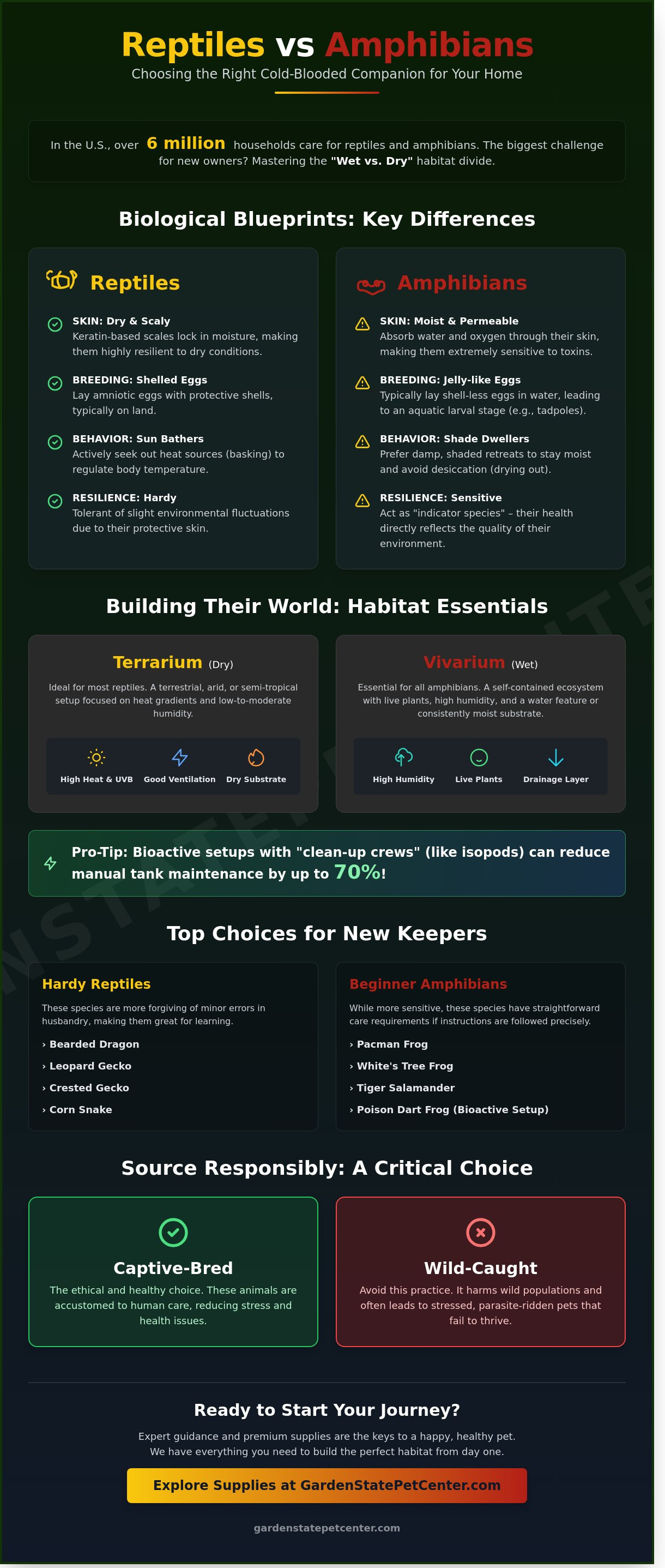
Mastering the care of Reptiles and Amphibians requires looking at the "Three Bs": Body, Breeding, and Behavior. Reptiles possess dry, keratin-based scales that lock in moisture, while amphibians have smooth, moist skin. When it comes to breeding, reptiles lay amniotic eggs with protective shells on land. Amphibians typically lay jelly-like eggs in water. Their behaviors differ too; reptiles are often seen basking under intense heat lamps, whereas amphibians spend their time in damp, shaded retreats to avoid desiccation. Permeable skin is a thin, porous biological membrane that allows liquids and gases to pass directly into the animal's system, which makes amphibians incredibly vulnerable to the natural oils or chemicals on your hands.
The Reptilian Advantage: Resilience and Diversity
Reptiles are built for durability. Their scaly skin acts as a waterproof barrier, allowing them to thrive in environments ranging from 5% humidity deserts to 90% humidity tropical rainforests. This physical armor makes them more tolerant of slight environmental fluctuations than their amphibian cousins. Whether you own a sun-loving Bearded Dragon or a nocturnal Crested Gecko, their bodies are designed to retain water and withstand the elements. Discover our premium reptile supplies to see how we support these resilient creatures.
The Amphibian Appeal: Unique Lifecycles and Sensitivity
Amphibians lead a fascinating "double life," often starting as aquatic larvae with gills before transforming into terrestrial adults. Because they breathe partly through their skin, they act as "indicator species." This means they're the first to react if there's a drop in air quality or a spike in water toxins. Keeping a frog or salamander requires maintaining a pristine habitat, as they absorb every chemical they touch. This sensitivity makes them a rewarding challenge for dedicated hobbyists who value ecological precision and specialized care routines.
Habitat and Environmental Needs: Terrariums vs. Vivariums
Designing a home for Reptiles and Amphibians involves more than just picking a glass box. You're building a life-support system. A traditional terrarium focuses on dry, terrestrial elements, which is ideal for species like Bearded Dragons or Leopard Geckos. These setups require sturdy ventilation and heat-resistant substrates to handle high-wattage lamps. Conversely, a vivarium acts as a self-contained jungle. It prioritizes high humidity and often features a drainage layer to prevent root rot in live plants. Choosing high-quality Reptile Terrariums ensures the glass can handle the thermal stress of heat lamps while maintaining a tight seal for moisture. Many hobbyists now embrace bioactive trends, adding isopods to act as a "clean-up crew." These tiny crustaceans consume decaying matter, maintaining a 24/7 cycle of cleanliness that mimics the wild and reduces manual maintenance by up to 70%.
Mastering the Microclimate: Heat and Light
Precision is everything when it comes to thermoregulation. You don't just need a hot tank; you need a gradient. This allows your pet to move between a 95-degree basking zone and a 75-degree cooling area. UVB bulbs are essential for calcium metabolism. Without proper 10.0 or 5.0 UVB output, reptiles face a high risk of developing painful bone deformities. Nighttime drops are helpful for stimulating natural behaviors, but don't let temperatures plummet. A ceramic heat emitter can maintain a safe 70-degree baseline without emitting light that disturbs sleep cycles.
Hydration and Humidity Management
Amphibians require constant moisture to breathe through their skin. This makes Habitat protection for reptiles and amphibians a vital part of your daily routine. Use a digital hygrometer rather than an analog one, as digital sensors are 15% more accurate on average. If you use a misting system, set it to trigger for 30 seconds every 4 to 6 hours. For those who prefer manual care, twice-daily spraying usually suffices. Always treat tap water with a quality conditioner to remove heavy metals and chlorine. Maintaining these levels prevents shedding issues and chronic lung problems. If you need a hand choosing the right gear, shop our premium reptile collection for trusted solutions that keep your pet thriving.
Nutrition and Feeding Strategies for Herpetological Pets
Proper nutrition for Reptiles and Amphibians requires a deep understanding of specific metabolic needs. Unlike domesticated mammals, these ectothermic animals have highly specialized digestive systems that vary wildly between species. You'll find that strict insectivores, such as Leopard Geckos, rely entirely on chitinous protein sources. In contrast, herbivores like Green Iguanas require a diet comprised of 80 percent leafy greens and 20 percent fruit or vegetables to maintain gut motility. Opportunistic omnivores, including Bearded Dragons, need a sliding scale of nutrients that shifts from high-protein insects in their youth to a plant-heavy diet as they reach maturity.
Expert keepers prioritize "gut-loading" as a non-negotiable part of the feeding process. This technique involves feeding high-quality, nutrient-dense meals to feeder insects 24 to 48 hours before they are offered to your pet. This ensures the insect acts as a vessel for vitamins that the reptile would otherwise miss. To support these complex needs, you can find premium reptile supplies online that include specialized gut-loading formulas and high-quality live feeders. Supplementing these meals with calcium and Vitamin D3 powders remains the foundation of long-term health, preventing metabolic bone disease which affects approximately 60 percent of captive reptiles kept without proper UVB or supplementation.
The Feeder Insect Hierarchy
Not all bugs provide the same value. Dubia roaches are the gold standard for many Reptiles and Amphibians because they contain roughly 23 percent protein and have a soft exoskeleton that's easy to digest. Crickets are a traditional staple, though they offer less meat-to-shell ratio than roaches. Use mealworms and waxworms sparingly; their high fat content makes them "treat" items rather than daily staples. For hydration boosts, hornworms are an excellent choice due to their high water content. The calcium-to-phosphorus ratio in feeder insects refers to the proportional balance of these two minerals, where a 2:1 ratio is ideal to ensure the animal can actually absorb the calcium provided.
Prepared and Holistic Diets
The industry has seen a massive shift toward high-quality prepared diets, especially for fruit-eating species. Gel diets for Crested Geckos are now formulated with 100 percent of the vitamins and minerals required for their entire life cycle. However, larger carnivorous reptiles still require raw, whole-prey items like frozen-thawed rodents to obtain essential nutrients found in organs and bone. It's often best to consult a certified pet nutritionist or a specialized expert when designing a custom meal plan for rare species. Our team at Garden State Pet Center helps owners navigate these choices to ensure every animal thrives during their stay or at home.
Choosing Your First Companion: Best Species for New Owners
Bringing home your first pet is an exciting milestone, but it requires careful planning and realistic expectations. Many new owners are drawn to exotic looks without realizing the long-term commitment involved. Most popular Reptiles and Amphibians live between 10 and 20 years, while some species, like certain tortoises, can exceed 50 years. This isn't a short-term hobby; it's a long-term relationship. As a trusted resource for pet keepers, we recommend starting with hardy species that forgive minor mistakes in husbandry. While Chameleons look incredible with their rotating eyes and color-changing skin, they're notoriously difficult for beginners. They require precise humidity levels and are easily stressed by handling, often leading to health issues for inexperienced keepers.
Top Beginner Reptiles
- Leopard Geckos: These docile, ground-dwelling lizards are a favorite for a reason. They don't require specialized UVB lighting like many other lizards, and their calm temperament makes them easy to handle.
- Bearded Dragons: Often called the "dog of the reptile world," these animals are highly interactive. They require a larger 40 to 120-gallon enclosure as they grow, but their social nature is rewarding for owners who want a pet that recognizes them.
- Corn Snakes: If you prefer a slithering friend, Corn Snakes are the gold standard. They stay a manageable 3 to 5 feet in length and are excellent feeders, rarely refusing a meal.
Top Beginner Amphibians
- Pacman Frogs: These sit-and-wait predators are perfect for small spaces. A 10-gallon tank is often sufficient for an adult. Their aggressive feeding response makes mealtime a fascinating display.
- Axolotls: These fully aquatic "Peter Pan" salamanders never undergo metamorphosis. They need cool water temperatures consistently below 68 degrees Fahrenheit. Always check local and state laws, as regulations on exotic species can vary.
- Fire-Bellied Toads: These are active, colorful, and do well in communal groups. They provide a lively display in a semi-aquatic "paludarium" setup.
If the thought of specialized lighting and live insects feels overwhelming, you might prefer a furry friend instead. You can explore our small animal collections to find hamsters, guinea pigs, or rabbits that fit your lifestyle. Whether you choose scales or fur, our expert team is here to ensure you have the right gear from day one.
Ready to start your journey with a new cold-blooded friend? Shop our premium reptile supplies to build the perfect habitat today.
Sourcing and Long-Term Care: Why Expert Guidance Matters
Choosing the right companion starts with understanding where they come from. You'll generally find two categories: captive-bred and wild-caught. Captive-bred animals are born and raised in controlled environments, making them hardier and more accustomed to human interaction. Wild-caught specimens often carry heavy parasite loads and experience extreme stress during transport, which leads to higher mortality rates. A trusted source prioritizes animal welfare by vetting breeders and maintaining strict quarantine protocols. Expert shops focus on the health of the animal rather than moving high volumes of inventory. This dedication ensures your Reptiles and Amphibians start their lives in your home with the best possible foundation.
The Risks of Big-Box Retailers
Generalist pet stores often lack the specialized knowledge required to maintain complex species. Mass-produced exotic animals frequently suffer from metabolic bone disease or respiratory infections due to improper lighting and humidity in retail displays. Staff at these locations might not understand the nuanced nutritional needs of a specific gecko or frog. At Garden State Pet Center, we emphasize Specialty Care for anxious or high-needs pets. Our team understands that a stressed animal requires a different approach than a social one. We provide the precise heat gradients and dietary variety that big-box retailers often overlook.
Preparing for the Long Haul
Owning exotic pets is a long-term commitment. A Ball Python can live over 30 years, and some tortoises easily surpass the 50-year mark. You need a plan that extends beyond next week. Locate a qualified veterinarian through the Association of Reptilian and Amphibian Veterinarians (ARAV) before a health crisis occurs. Establishing a relationship with an expert early ensures you have a reliable partner for annual checkups. For long-lived species, consider creating a "pet trust" or a formal care plan to ensure their safety if your circumstances change. While you're securing the future of your exotic companions, don't forget the rest of your furry family. Check out our premium pet food options for your other household pets to keep everyone in the home thriving.
Professional guidance makes the difference between a struggling pet and a thriving one. Visit Garden State Pet Center today for hands-on advice and premium supplies tailored to your specific Reptiles and Amphibians. Our expert staff is ready to help you build a habitat that lasts a lifetime. Take advantage of our specialized knowledge and see why we're the trusted choice for exotic pet owners in NJ.
- Discover high-quality habitats designed for specific humidity needs.
- Shop our selection of nutrient-dense feeders and supplements.
- Visit us in Audubon to speak with a knowledgeable local guardian about your pet's future.
Build a Thriving Habitat for Your New Companion
Caring for Reptiles and Amphibians requires a dedicated focus on environmental precision and species-specific biology. You now understand how to differentiate between vivariums and terrariums while prioritizing the nutritional strategies that prevent common health issues. Since 1990, Garden State Pet Center has operated as a trusted leader in exotic care for the Audubon community. We provide specialized resources you won't find at big-box retailers, including a Certified Pet Nutritionist on-site to guide your feeding choices. If you ever need to travel, our facility offers specialized boarding designed specifically for the unique needs of ectothermic pets. It's our mission to ensure you feel confident. You don't have to guess about lighting, heat gradients, or supplements when you have access to three decades of professional expertise. We're ready to help. Let's create a vibrant, healthy home for your exotic pet today.
Explore Our Expert-Vetted Reptile and Amphibian Collection
We can't wait to see the incredible ecosystem you create for your new friend.
Frequently Asked Questions
Is a reptile or an amphibian easier for a first-time pet owner?
Reptiles are generally easier for first-time owners because they're hardier and less sensitive to environmental shifts than amphibians. Species like the Leopard Gecko or Corn Snake don't require the complex humidity levels that delicate frogs or salamanders need. According to the 2023-2024 APPA National Pet Owners Survey, over 6 million households choose these animals, often starting with beginner-friendly reptiles due to their straightforward care routines.
Do all reptiles and amphibians need specialized UVB lighting?
No, not every species requires UVB lighting, but it's vital for the health of most day-active pets. Diurnal lizards like Bearded Dragons need UVB to synthesize Vitamin D3 and process calcium. Research shows that 100 percent of these species risk developing Metabolic Bone Disease without proper light. Conversely, nocturnal species like Crested Geckos can thrive without it, provided they receive the correct dietary supplements from a trusted source.
Can I keep reptiles and amphibians in the same enclosure?
You shouldn't house different species together because it leads to territorial stress, disease transmission, or predation. A 2021 study in the Journal of Herpetological Medicine and Surgery found that cross-species housing increases pathogen spread by 40 percent. Since reptiles and amphibians have unique temperature and humidity needs, keeping them separate ensures a 100 percent safe environment. This specialized approach prevents unnecessary health complications for your exotic pets.
How often do reptiles and amphibians need to be fed?
Feeding schedules vary based on the animal's age and species, ranging from daily feedings to once every two weeks. Juvenile lizards typically require daily insects to support their rapid growth phases. In contrast, an adult Ball Python usually eats just once every 10 to 14 days. It's important to follow a schedule tailored to your pet's metabolic rate to prevent obesity or nutritional deficiencies.
What is the most common mistake new reptile owners make?
The most frequent error is failing to maintain precise temperature and humidity levels within the habitat. Statistics indicate that 70 percent of health issues seen by exotic veterinarians stem from these basic husbandry mistakes. New owners often rely on inaccurate analog gauges instead of high-quality digital thermometers. Visit our center to find expert tools that ensure your pet's environment remains stable and healthy year-round.
Are reptiles and amphibians safe for households with young children?
These animals are safe for families as long as adults supervise all interactions and enforce strict hand-washing rules. The CDC recommends that children under 5 years old avoid direct contact with reptiles and amphibians to prevent Salmonella exposure. Teaching children to respect the animal's space prevents bites or accidental injury. When handled correctly, these pets provide a wonderful educational experience for older children and hobbyists alike.
How do I know if my reptile or amphibian is sick?
Look for clinical signs such as lethargy, labored breathing, or a sudden loss of appetite. A weight loss of 10 percent or more is a critical warning sign that requires an immediate consultation with an expert. You should also check for unusual discharge from the nose or mouth and changes in skin texture. Early detection is the most effective way to treat common ailments and ensure a full recovery.
Do I need a license to own reptiles or amphibians in the United States?
Permit requirements depend on your specific state and the species you intend to keep. In New Jersey, the Division of Fish and Wildlife requires a $10 annual permit for certain non-traditional exotic species. Other states may have total bans on specific venomous or invasive animals. Always check your local municipal codes and state regulations before bringing a new pet home to ensure you're fully compliant with the law.