

Avian DNA Sexing: The Complete Guide to Bird Gender and Health Testing


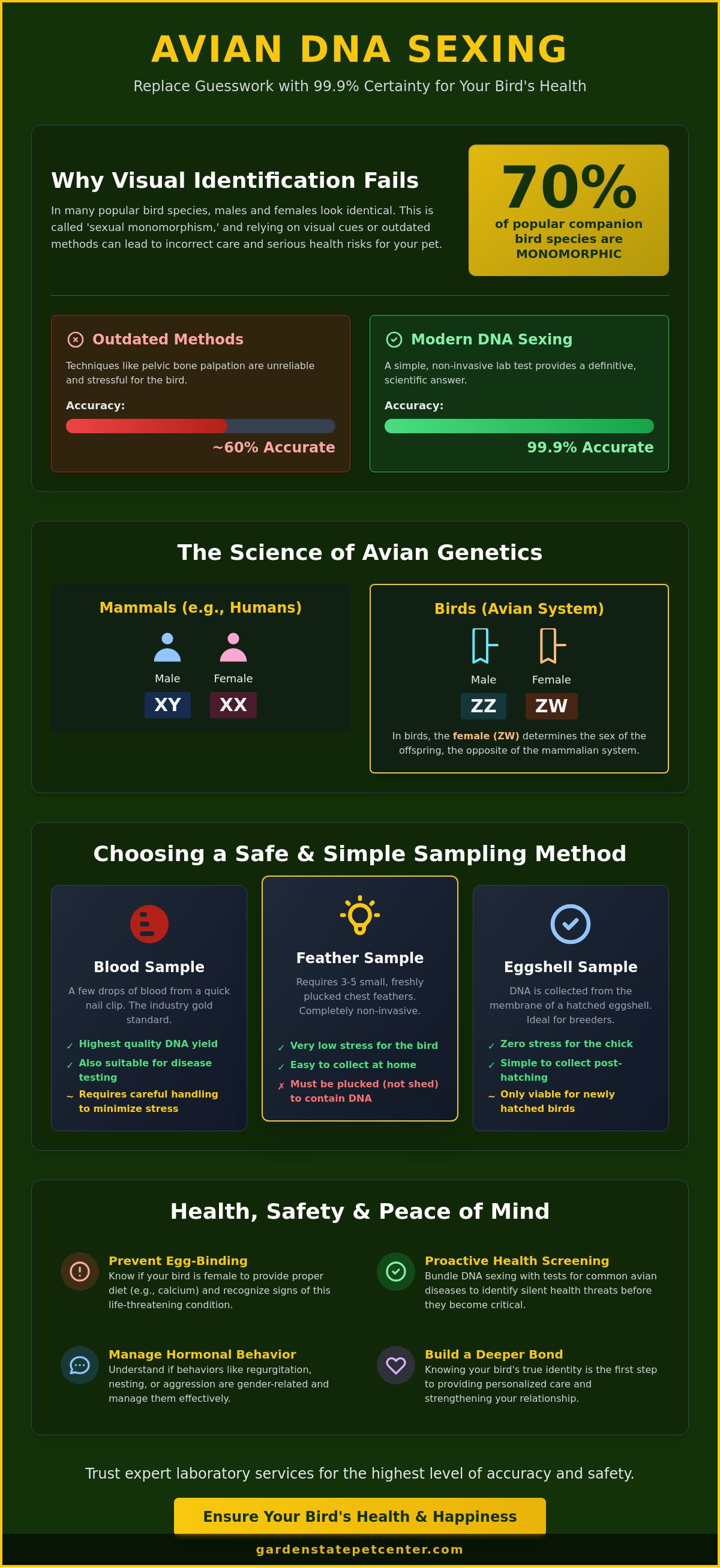
In more than 70% of popular companion bird species, there are no visible physical differences between males and females. This biological reality means many owners spend years guessing their pet's gender, only to be surprised by unexpected hormonal behaviors or sudden health emergencies. It's stressful to worry about the risk of egg-binding in a bird you assumed was male, and we understand the anxiety that comes with choosing the right sampling method for a sensitive pet.
You deserve the peace of mind that comes from expert knowledge. By utilizing professional Avian DNA Sexing, you can replace guesswork with 99.9% clinical certainty to ensure your feathered friend receives the premium care they need. This specialized testing is a foundational step for anyone looking to build a deeper bond or make informed breeding decisions. Discover the science behind these non-invasive methods and learn how a simple test helps prevent serious reproductive complications. We will walk you through the most reliable sampling techniques and the vital health benefits that come with knowing your bird's true identity. As your trusted partner in avian care, we are here to help you provide a safe, healthy home for your companion.
Key Takeaways
- Learn why visual identification is unreliable for monomorphic species and how molecular testing provides a definitive answer for your bird.
- Understand the unique ZZ/ZW chromosomal science that determines gender and why it differs significantly from mammal genetics.
- Compare the pros and cons of blood, feather, and eggshell sampling to choose the most efficient and stress-free method for your pet.
- Discover how to integrate vital disease screening with Avian DNA Sexing to identify silent health threats before they become critical.
- Find out why trusting expert laboratory services ensures the highest level of accuracy and safety for your feathered companion.
Understanding Avian DNA Sexing: Why Visual Identification Fails
Determining the gender of a bird isn't always as simple as looking at the color of its feathers. Avian DNA Sexing is a highly accurate molecular method that identifies a bird's gender by analyzing its sex chromosomes. Unlike mammals, where males carry XY chromosomes, female birds are the ones with heterogametic chromosomes (ZW), while males are homogametic (ZZ). Understanding Avian DNA Sexing through this scientific lens removes the guesswork that often leads to care errors. For years, owners relied on "old school" techniques like pelvic bone palpation, but this method is notoriously unreliable, often reaching only a 60% accuracy rate even when performed by experienced handlers.
Relying on physical touch or visual cues is stressful for the animal and frequently leads to incorrect conclusions. Modern DNA testing requires only a few drops of blood or a small sample of feathers to provide a definitive answer. This expert approach ensures that you provide the right environment and nutrition from day one. To better understand how this process works in a practical setting, watch this helpful video:
The Mystery of Monomorphic Birds
In the avian world, over 70% of species are considered monomorphic, meaning males and females look identical to the human eye. This group includes popular pets like African Greys, Cockatoos, and various types of Lovebirds. Without Avian DNA Sexing, owners often struggle to interpret behaviors. Hormonal triggers, such as regurgitation or nesting attempts, can be misleading. A bird you assume is a territorial male might actually be a female looking for a nesting site. This clarity is vital when browsing talking birds for sale, as gender can influence how a bird bonds with its new family. Trusted breeders and specialty shops prioritize DNA testing to ensure a successful match between the bird and its owner.
The Risks of Gender Guesswork
Mistaking a bird’s gender is more than a simple clerical error; it’s a potential health crisis. Female birds are susceptible to egg-binding, a life-threatening condition where an egg becomes stuck in the reproductive tract. If you assume your bird is male, you might miss the early warning signs or fail to provide the premium calcium supplements necessary for safe egg production. Dietary needs differ significantly between the sexes; egg-laying females require higher mineral intake than their male counterparts. Additionally, knowing the biological sex allows you to manage aggressive or nesting behaviors proactively. By using premium bird supplies tailored to your bird's specific needs, you can mitigate these risks and ensure a long, healthy life for your companion.
The Science of Avian Genetics: ZZ and ZW Chromosomes
Understanding bird biology starts with a look at their unique genetic blueprint. Unlike mammals where males carry XY chromosomes and females carry XX, birds operate on a completely different system. In the avian world, males possess two identical chromosomes known as ZZ. Females carry the ZZ and ZW Chromosomes, making them the sex that determines the gender of the offspring. This biological reversal is why physical appearance alone often fails to reveal a bird's true sex, especially in monomorphic species where males and females look identical to the naked eye.
Avian DNA Sexing has revolutionized how we care for these animals by looking directly at these chromosomal markers. Modern laboratory testing offers a 99.9% accuracy rate, providing pet owners with the certainty they need for breeding or specialized health management. This high level of precision eliminates the guesswork that used to rely on invasive surgical sexing or waiting years for specific behavioral cues to emerge.
How PCR Technology Works for Birds
PCR, or Polymerase Chain Reaction, is a sophisticated laboratory technique that copies and amplifies specific segments of DNA for detailed analysis. Because this process creates millions of copies from a single original strand, labs only require a microscopic amount of biological material to get a result. A single drop of blood or a few freshly plucked feathers provide more than enough genetic data for a successful test.
The timeline for these results is impressively fast. Once a trusted lab receives your bird's sample, the molecular analysis typically concludes within 24 to 48 hours. You can expect a formal digital certificate to arrive in your inbox within 3 to 5 business days; this makes it a highly efficient resource for busy bird owners who need quick answers.
Accuracy vs. Reliability
While the technology is nearly perfect, the reliability of a test often depends on the quality of the sample provided. Lab errors are extremely rare in specialized facilities, but sample contamination is a common hurdle. If you handle multiple birds without washing your hands between collections, you might accidentally transfer DNA from one bird to another's sample kit. Consider these factors to ensure the best results:
- Professional Collection: Expert handlers reduce the risk of cross-contamination by approximately 15% compared to inexperienced collectors.
- Sample Integrity: Use sterilized tools and follow kit instructions exactly to prevent environmental DNA from interfering with the test.
- Specialized Labs: Always choose a facility that focuses specifically on avian genetics rather than a generalist lab.
If you're preparing for a new addition to your flock, you can explore our premium bird supplies to ensure your pet has everything they need for a healthy start. Using a trusted partner for your avian care needs ensures your bird receives the specialized attention they deserve from day one.
Comparing DNA Sampling Methods: Blood vs. Feathers
Choosing the right method for Avian DNA Sexing depends on your bird's size, temperament, and your own comfort level. Labs typically process three sample types: blood, freshly plucked feathers, and eggshells. While each provides the necessary genetic material, they differ in reliability and the level of stress they might cause your pet. Scientists use Molecular techniques for sex identification of captive birds to ensure results are 99.9% accurate, but the quality of your sample determines the success of the test. Blood remains the most consistent source, while feathers offer a needle-free alternative for sensitive owners.
Blood Card Sampling: The Gold Standard
Veterinarians and experienced breeders consider blood cards the most reliable option. You'll use the "toenail clip" method, which involves trimming a single nail just enough to produce a small drop of blood. This method is preferred because blood contains a high concentration of DNA, leading to faster lab processing times, often within 48 hours of receipt. If the nail bleeds, apply a pinch of styptic powder immediately to stop the flow. Once the blood dries on the collection card, it stays stable for weeks. This stability makes it ideal for shipping to national labs without worrying about sample degradation during transit.
Feather Testing: The Non-Invasive Alternative
Feather testing is a popular choice for owners who want a less invasive experience. You can't use molted feathers found at the bottom of the cage; they don't contain live cells at the follicle. You must pluck 5 to 8 feathers directly from the bird's chest or back. These specific areas provide the best DNA yield for Avian DNA Sexing. While this method is easier for many owners, it carries a higher risk of "insufficient DNA" results. If the follicle is damaged or too small, the lab might request a second sample, which can delay your final results by 7 to 10 days.
Preparing your bird helps minimize anxiety during the process. Follow this checklist for a smooth, stress-free experience:
- Wash your hands thoroughly to avoid cross-contaminating DNA if you have multiple birds.
- Have a clean, soft towel ready to gently restrain your bird.
- Keep styptic powder and sterilized clippers within reach before you begin.
- Work in a quiet, well-lit room to reduce environmental stressors.
- Ensure the bird is calm and has not just finished a high-energy flight.
After you've collected the sample, offer your pet some extra attention. Using premium bird supplies like high-quality treats or a new foraging toy can distract them and aid in a fast recovery. Providing a calm environment and a favorite snack ensures they associate the handling with a positive reward, keeping your bond strong.
Beyond Gender: Integrating Disease Screening
Protect your feathered companions by looking past the surface. Avian DNA Sexing serves as a vital diagnostic bridge that goes far beyond identifying a male or female. Many bird owners hesitate to test because their pet appears vibrant and active. This is a common mistake. Birds are biologically programmed to mask symptoms of illness to avoid appearing vulnerable to predators. By the time a bird looks sick, the disease is often at a critical stage.
A single blood or feather sample collected for sexing can typically be used for a full suite of diagnostic tests. This efficiency minimizes stress for your bird and provides a comprehensive health baseline. Integrating disease screening into your initial Avian DNA Sexing request is the most proactive step you can take during the quarantine period. It ensures you aren't accidentally introducing a "silent killer" into a multi-bird household.
Common Viral Threats: PBFD and Polyomavirus
Psittacine Beak and Feather Disease (PBFD) is a resilient circovirus that can persist in an environment for months. It is notoriously difficult to eradicate and often results in 100% mortality rates in neonates and young birds. Avian Polyomavirus (APV) is equally devastating for breeders and hobbyists. APV causes sudden death in young birds, often with no prior warning signs. Detecting these viruses early through Avian DNA Sexing panels protects your entire flock by identifying asymptomatic carriers. If you manage an aviary, these tests are not optional; they are a requirement for maintaining a healthy population.
Psittacosis and Chlamydia Screening
Being a trusted bird owner involves protecting your human family as well as your pets. Psittacosis, caused by the bacterium Chlamydia psittaci, is a zoonotic disease. According to data from the CDC, approximately 10 human cases are reported annually in the United States, though many more likely go undiagnosed due to flu-like symptoms. Because this can transfer from birds to humans, routine screening for new additions is a hallmark of expert care. We recommend a full panel for any new bird added to your collection to ensure your home remains a safe environment for everyone.
- Efficiency: One sample covers gender and multiple health markers.
- Safety: Prevents the spread of contagious pathogens to existing pets.
- Peace of Mind: Confirms your bird is as healthy on the inside as they look on the outside.
- Responsibility: Reduces the risk of zoonotic transmission to family members.
Don't leave your bird's health to chance. Take a proactive approach to their well-being today. Shop our premium bird supplies to find the best nutrition and care products for your growing flock.
Professional DNA Services: Accuracy You Can Trust
Relying on traditional "home-brewed" methods to determine a bird's gender often leads to disappointment. Visual cues and pelvic bone palpation are notoriously unreliable, with accuracy rates frequently hovering around 50 percent, which is no better than a coin flip. Professional Avian DNA Sexing eliminates this guesswork by providing a definitive answer based on precise genetic markers. This scientific approach ensures you aren't waiting years for a behavioral cue that might never come. It also provides immediate peace of mind for owners who want to provide the best possible care for their companions from day one.
Trusting a professional laboratory ensures your bird receives a formal, verifiable DNA certificate. This document is essential for your pet's permanent medical file and can increase a bird's value by 15 to 20 percent in specialized breeding circles. Beyond the certificate, seek expert assistance for sample collection. A professional technician or avian specialist can perform a quick feather pluck or nail clip with minimal stress. This proactive step prevents common accidents like broken blood feathers or excessive bleeding that can occur during DIY attempts at home. Your bird's safety is always the top priority.
What to Look for in an Avian Lab
Choose a facility that holds ISO/IEC 17025 accreditation to ensure the highest standards of technical competence. Specialized labs focus exclusively on exotic species, which means they maintain a vast database of genetic markers for hundreds of different parrot species. Most reputable labs now offer national shipping options, allowing you to send samples across the country securely. Trusted pet centers often act as a bridge to these high-end facilities, handling the logistics and sample preparation so you can focus on your bird's daily wellbeing.
Next Steps After Receiving Results
Once the results arrive, update your bird's health records immediately. Gender plays a massive role in long-term wellness and preventative medicine. For instance, female birds require specific monitoring for egg-binding symptoms and may need a 10 to 15 percent increase in calcium intake during specific hormonal cycles. You can also tailor their environment by exploring gender-specific bird toys and accessories that encourage natural foraging and enrichment. If your results were part of a larger health panel, consult with an expert to interpret complex data regarding PBFD or Polyomavirus. Taking a holistic approach to care means combining Avian DNA Sexing with premium nutrition and regular grooming to help your feathered friend thrive for decades.
Ensure Your Bird's Vibrant Future Today
Relying on physical appearance to determine your bird's gender is often a guessing game that leads to surprises later. Professional Avian DNA Sexing removes the mystery by analyzing ZZ and ZW chromosomes with laboratory precision. This process isn't just about knowing if your pet is male or female. It's a vital step in proactive health management that allows you to screen for common avian diseases simultaneously. Since 1990, Garden State Pet Center has operated as a trusted expert in exotic avian care, providing the community with reliable answers and specialized support. Our comprehensive laboratory testing fees cover both gender and health screenings to give you a full picture of your bird's wellness. Once you receive your results, you can consult with our on-site certified pet nutritionists to tailor a diet that supports your bird's specific biological needs. Taking this step ensures you're prepared for every stage of your companion's life. We're here to help you provide the premium care your feathered friend deserves. You'll feel much more confident once you have the facts about your pet's genetics.
Explore Professional Avian DNA Testing and Health Services
Frequently Asked Questions
Is avian DNA sexing painful for my bird?
Avian DNA sexing is a minimally invasive process that causes very little discomfort for your bird. If you choose the feather method, you'll need to pluck 5 to 7 small chest feathers to ensure there's enough live tissue at the follicle. While your bird might feel a quick pinch, the sensation lasts less than 1 second. This method is much safer than older surgical techniques that required anesthesia and carried a 10 percent risk of complications.
Can I use naturally molted feathers for a DNA test?
You cannot use naturally molted feathers because they lack the fresh genetic material required for a successful test. To get an accurate result, the lab needs the living cells found in the calamus or the tip of a freshly plucked feather. Molted feathers found at the bottom of the cage have DNA that has degraded over 24 to 48 hours, making them useless for laboratory analysis.
How long does it take to get bird DNA results back?
Most laboratories provide results within 2 to 5 business days after receiving your sample. While shipping times vary, once the lab logs your bird's sample, you'll typically receive an email certificate by the end of the week. At Garden State Pet Center, we recommend using tracked shipping to ensure your kit arrives safely and to avoid a 3 to 4 day delay in processing.
What is the most accurate method for bird sexing?
DNA testing via blood or feather samples is the most accurate method available, offering a 99.9 percent accuracy rate. This modern approach has largely replaced surgical sexing, which was once the standard but required invasive procedures. By using specialized PCR technology, labs can identify the Z and W chromosomes with nearly 100 percent certainty, ensuring you know your bird's gender without any guesswork.
At what age can a bird be DNA tested?
You can test a bird at any age, including hatchlings that are only 1 day old. Since DNA remains constant throughout a bird's life, there's no need to wait for a specific developmental milestone or the first molt. Many owners prefer testing early to establish a proper health baseline and to choose an appropriate name before the bird reaches the 6 month mark.
Is DNA sexing necessary if I don’t plan on breeding my bird?
DNA sexing is essential even for non-breeding birds because it helps you manage gender-specific health risks. For instance, female birds are susceptible to egg binding, a condition that affects approximately 10 percent of pet birds and requires immediate veterinary attention. Knowing your bird's gender allows you to adjust their diet and calcium intake to prevent these life-threatening reproductive issues before they start.
What happens if the lab results come back as "Inconclusive"?
If a result comes back inconclusive, it usually means the sample didn't contain enough high-quality DNA. This happens in about 2 percent of cases, often due to a blood spot being too small or a feather follicle being damaged. If this occurs, most labs will request a second sample to ensure your Avian DNA Sexing report is accurate and reliable.
Can DNA testing detect bird diseases at the same time as gender?
Yes, many labs offer combo panels that test for common avian diseases alongside gender. You can screen for PBFD, Chlamydia, and Polyomavirus using the same blood or feather sample submitted for Avian DNA Sexing. Testing for these 3 major pathogens is a proactive way to protect your flock and ensure your new companion is healthy from the moment they arrive home.
Share this post
- 0 comment
- Tags: Avian DNA Sexing