


Online Pet Nutrition Consultations: Personalized Guidance for Pets with Allergies


An online pet nutrition consultation for allergies reviews your pet’s symptoms, health history, current food, treats, and supplements to provide personalized nutrition guidance. It can help clarify feeding choices, but it cannot diagnose an allergy or replace veterinary care. If you suspect an allergy or need to make a medical decision, consult your veterinarian.
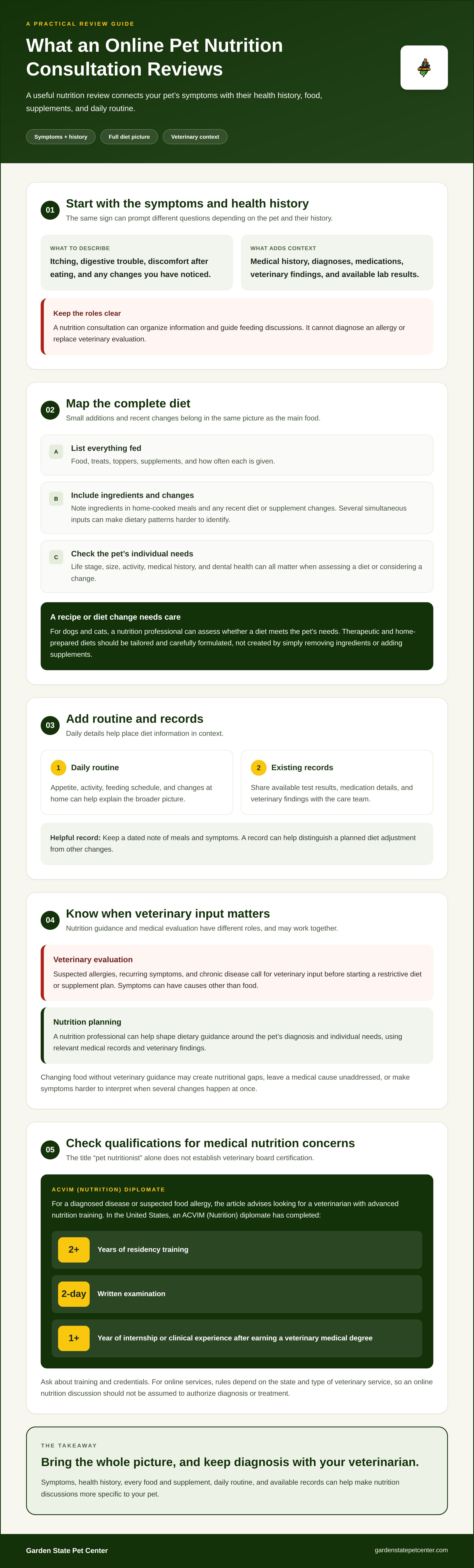
When your pet is itchy, has digestive trouble, or seems uncomfortable after eating, it’s understandable to look closely at food. These signs can have different causes, so reviewing the whole picture is more useful than making a quick diet change. This article explains what an online consultation may review, how that information can guide nutrition planning, and when veterinary input matters.
You’ll also learn what to look for in a qualified nutrition professional, which diet and health details to prepare, and how to keep changes suited to your pet’s needs. The aim is a clearer next step, not a one-size-fits-all food recommendation.
Key Takeaways
- A useful nutrition review considers symptoms alongside medical history, current food, treats, supplements, and daily routine.
- Keep diet guidance separate from diagnosis: allergy symptoms and medical decisions need veterinary evaluation.
- Learn how a consultation turns health and feeding details into a plan tailored to your pet’s needs.
- Understand when a nutrition professional may involve your veterinarian or need medical records and lab results.
- Know what qualifications to look for when choosing an animal nutrition professional.
Review of medical history, diet, supplements, lab work, and lifestyle
A useful review connects symptoms with your pet’s routine, including meals, treats, supplements, medical history, and available lab work. An itchy dog’s food history, for example, may raise different questions from a cat’s recurring digestive concerns.
Diet and Supplement Assessment
List every food, treat, topper, and supplement your pet receives, and note how often. Include the ingredients in home-cooked meals and any recent changes. Multiple foods or supplements can make it harder to identify a dietary pattern. Needs also vary with life stage, size, activity, medical history, and dental health.
For dogs and cats, a nutrition professional can assess whether the current diet meets your pet’s needs and whether a proposed change can maintain nutritional balance. A therapeutic recipe should be tailored to the animal, not created by removing ingredients or adding supplements without guidance. The U.S. Food and Drug Administration provides current recalls and safety alerts for pet foods and other products.
Veterinary-Guided Diet Changes
Veterinary-guided nutrition counseling connects feeding decisions with your pet’s diagnosis, symptoms, and medical records. A veterinarian can assess whether signs suggest a food-related concern or another disease, while a nutrition professional can help shape a suitable diet plan. Existing lab results, medication details, and veterinary findings can inform the discussion.
Changing food without veterinary guidance can create nutritional gaps, leave a medical cause unaddressed, or make symptoms harder to interpret if several changes happen at once. Suspected allergies and chronic disease therefore call for veterinary evaluation before starting a restrictive diet or supplement plan.
For a pet with a chronic condition, nutrition planning should connect the feeding plan to the diagnosis and the animal’s individual needs. A specialist can assess commercial food options or develop a home-prepared recipe, which must be carefully formulated to provide appropriate nutrition. Review supplements as part of the full plan, not as a substitute for a balanced diet or veterinary care.
Lab work and lifestyle details provide useful context, but they don’t replace a veterinary exam. A consultation can consider test results alongside appetite, activity, feeding schedule, and changes at home. Keep a dated record of meals and symptoms, and share existing results and medication information with your veterinary team. This makes it easier to distinguish a planned diet adjustment from unrelated changes.
Nutrition consultation process and veterinary referrals
An online nutrition consultation can organize your pet’s history and feeding details, then identify questions for the veterinary team. The right professional depends on whether you need nutrition guidance, medical evaluation, or both.
Nutritionist Qualifications and Certification
For a pet with a diagnosed disease or suspected food allergy, look for a veterinarian with advanced nutrition training. In the United States, an ACVIM (Nutrition) diplomate has completed at least 2 years of residency training and passed a two-day written examination. Diplomates also complete at least 1 year of internship or clinical experience after earning a veterinary medical degree.
The title “pet nutritionist” alone doesn’t establish veterinary board certification. Ask about a professional’s training and credentials, and distinguish nutrition education from veterinary diagnosis and treatment. A board-certified veterinary nutritionist can evaluate commercial foods and supplements, formulate home-prepared diets, and advise on nutrition-related conditions. This expertise can be especially useful when a pet’s medical history makes routine feeding advice insufficient.
Conditions Addressed by Nutritionists
Veterinary nutritionists work with food allergies, urinary stones, gastrointestinal disease, chronic kidney disease, obesity, and eating disorders. They may assess how diet relates to a condition and shape a nutrition plan around the pet’s needs. A dog with recurring digestive concerns, for example, may need a different discussion from a cat with diagnosed kidney disease.
Can a veterinary nutritionist diagnose food allergies in dogs and cats online? An online consultation can review diet history and help frame nutrition questions, but it shouldn’t replace veterinary evaluation for diagnosis. Share your pet’s symptoms and existing findings so the nutrition professional can identify where veterinary input is needed.
Veterinary Referrals and Online Consultations
A referral can connect nutrition planning with your pet’s medical care. The referring veterinarian may provide a referral form and medical records, giving the nutritionist relevant history and test results. During the consultation, the professional discusses the case with you before developing dietary guidance. This coordinated approach keeps nutrition decisions connected to diagnosis and treatment.
What qualifications should an online pet nutritionist have in the United States? For medical nutrition concerns, seek a veterinarian with recognized specialty training, such as ACVIM (Nutrition) board certification. Are online veterinary consultations allowed in your state? Rules depend on the state and type of veterinary service, so an online nutrition discussion shouldn’t be assumed to authorize diagnosis or treatment. If symptoms or a medical condition are involved, include your veterinarian in the care plan.
How does the consultation process work?
An online pet nutrition consultation for allergies reviews your pet’s situation and turns it into practical dietary guidance. When symptoms recur, nutrition planning should connect food choices with veterinary findings rather than treating a diet change as a diagnosis.
When comparing online services, check what each consultation includes: review of your pet’s history, discussion of current feeding, a written plan, and coordination with a veterinarian when medical concerns arise. Clarify whether the professional provides nutrition guidance or veterinary diagnosis, since these are different roles. The plan should address your pet’s needs and explain how to follow its recommendations.
A consultation typically begins with a discussion of your pet’s situation before the professional shapes a nutrition plan. They consider the reason for the appointment, your pet’s current diet, and any diagnosed health condition. For recurring stomach concerns, for example, a plan should account for veterinary findings and the full diet, not just one ingredient identified by the owner.
Prescription diets may be part of a veterinarian’s treatment plan for allergies or another health condition. They aren’t a universal solution: selection depends on the diagnosis and your pet’s needs. A veterinary nutritionist can assess food options or formulate a therapeutic recipe, including a homemade diet when appropriate. Recipes need to be planned as complete diets, not improvised by removing foods or adding supplements.
An elimination diet for suspected food allergies removes selected ingredients under veterinary guidance, then evaluates whether symptoms change. Your veterinarian determines the approach and interprets the result. Unplanned treats, toppers, or other foods can make the outcome harder to assess, so follow clear, consistent feeding instructions.
Medical nutrition planning can also address urinary stones, gastrointestinal disease, chronic kidney disease, obesity, or eating disorders. Each plan should reflect the diagnosis, your pet’s health, and existing care. A body condition assessment adds context by considering body shape alongside weight, food intake, and activity. It helps frame nutritional needs, but cannot identify an allergy or replace medical evaluation.
Ask how the consultation handles follow-up questions, changes in symptoms, and communication with your veterinarian. A clear process distinguishes dietary recommendations from concerns that belong in the veterinary care plan. This helps you apply nutrition advice without mistaking it for a diagnosis.
Personalized nutrition plans and budget-conscious options
A tailored feeding plan matches food recommendations to your pet’s health, life stage, activity, and household routine. For dogs and cats with allergy concerns, nutrition guidance should also align with the veterinary care plan.
Custom Diets and Feeding Plans
A personalized plan can specify food type, portion guidance, meal timing, and suitable extras. Recommendations for a less-active adult dog, for example, may differ from those for a growing puppy or a cat with a diagnosed condition. The plan should clarify whether a food is complete or intended as a treat, topper, or supplement.
Custom recipes need careful formulation, especially when homemade or intended to meet medical needs. A tailored plan should account for ingredients, preparation, and required nutrients, rather than relying on a list of foods to avoid. Dogs and cats have different nutritional requirements, so a recipe for one species must not be used for the other.
Consultation Costs and Budget Options
There isn’t one fixed cost for online pet nutrition consultations. Fees can depend on the professional’s qualifications, the complexity of your pet’s needs, the detail of the written plan, and whether follow-up is included. A basic review of feeding choices differs from detailed planning for a chronic condition or homemade diet.
To assess value, compare what the service includes, not just its headline fee. Look for clear details about history review, recommendations, written instructions, and follow-up support. For allergy concerns, coordination with your veterinarian may also affect the work involved.
Budget-conscious planning starts with the foods and routine already working for your pet. A nutrition professional can consider whether portioning, meal timing, or suitable food choices could meet your goal without replacing everything at once. Changes for a diagnosed condition should follow your veterinarian’s guidance.
For example, a household with two cats may need a plan that accounts for different life stages or health needs, even if both cats share a home. Separate feeding areas or measured meals may help you follow distinct recommendations. Include treats and supplements in the plan, since extras can affect nutritional balance or make a dietary trial harder to interpret.
Ask how recommendations translate into daily feeding: what to serve, how to handle treats, and which changes require veterinary input. If the plan includes a homemade recipe, clarify how to prepare it and whether it is designed as a complete diet. These details help you assess the time, food choices, and ongoing care involved before adopting the plan.
In the United States, the right plan depends on your pet’s needs, not a standard menu. A useful written plan explains those needs and its recommendations clearly, while distinguishing nutrition advice from allergy diagnosis or treatment.
Finding certified animal nutritionists
Start with the concern you need help addressing, then match the professional’s qualifications to it. For a dog or cat with a diagnosed condition, a board-certified veterinary nutritionist can assess diet and nutrition alongside the medical picture.
In the United States, the American College of Veterinary Internal Medicine (ACVIM) recognizes veterinary nutrition as a specialty. ACVIM (Nutrition) diplomates complete at least 2 years of residency training and pass a two-day written examination. They also complete at least 1 year of internship or clinical experience after earning a veterinary medical degree.
Credentials matter because “nutritionist” can describe professionals with different training and scopes of practice. A clinical pet nutrition credential is not the same as veterinary board certification. For food-allergy concerns or chronic disease, seek veterinary training when the consultation involves medical nutrition decisions, diagnosis, or treatment.
Use the ACVIM website directory to search for board-certified veterinary nutritionists and other specialists. Narrow your search to the care needed, such as nutrition planning for a diagnosed gastrointestinal condition. Then review the professional’s stated specialty and whether the consultation includes your pet’s veterinarian and medical records.
Before choosing an online service, make sure its process suits your pet and the question you need answered. Useful points to clarify include:
- Whether the professional is a veterinarian and holds ACVIM (Nutrition) board certification.
- Whether the service provides nutrition guidance, medical diagnosis, or both.
- Whether the professional has experience with your pet’s species and health concern.
- How the consultation uses veterinary records, lab results, and follow-up information.
Consider the professional’s experience with your pet’s species. A dog’s food-allergy discussion differs from nutrition planning for a companion bird, reptile, or small mammal. Ask how the professional’s training applies to your animal rather than assuming dog-and-cat expertise transfers to every species. A balanced plan must suit the animal’s species, life stage, health, and daily feeding routine.
Online meetings can make feeding details easier to discuss, but they don’t replace a veterinary examination when symptoms need medical evaluation. Recurring itching, for example, may prompt nutrition questions while still requiring a veterinarian to assess possible causes. A qualified specialist should explain how nutrition recommendations connect with veterinary care and what information supports the plan.
Choose based on credentials, relevant experience, and a clear process, not title alone. For medical nutrition needs, ACVIM board certification is a specific credential to look for. For other animals or general feeding questions, confirm that the professional’s training fits the species and advice you need.
Pet Nutrition and Allergy Concerns
For general information about pet nutrition, see these pet nutrition resources. When considering food choices, think about your animal’s individual needs. For allergy concerns, nutrition guidance can support thoughtful diet planning, while diagnosis and medical treatment remain part of veterinary care. Bring questions about your pet’s current food, treats, and feeding routine to your veterinarian to help focus the discussion.
When comparing pet foods, consider a food’s ingredients and nutritional role. The words “natural” or “holistic” alone don’t show that it suits every pet, and food choices should fit the individual animal.
Choose a Practical Next Step for Your Pet
Before changing food again, decide what you most need help with: understanding suitable food options, establishing a feeding routine, or coordinating nutrition questions with your veterinarian. A clear focus can make an online pet nutrition consultation for allergies more useful and keep the next step centered on your pet’s needs.
Nutrition counseling and veterinary care serve different roles. If symptoms persist or your pet has a diagnosed condition, keep your veterinarian involved in diagnosis and treatment decisions. For food selection, consider your pet’s individual needs rather than relying on a label alone. Food cannot diagnose or treat an allergy.
Choose the next step that fits your pet’s situation, and keep the conversation centered on their well-being. Contact Garden State Pet Center to discuss nutrition guidance and suitable food choices.
Frequently Asked Questions
Should You Consider Prescription Pet Food?
Consider prescription pet food when your veterinarian recommends it for your pet’s care plan. Before starting, clarify whether it should make up the full diet, whether treats need adjusting, and what to do if your pet refuses it. These details help you follow the plan consistently. A prescription label alone doesn’t show that a food suits another pet or condition.
What are some conditions that Veterinary Nutritionists treat?
Veterinary nutritionists may address needs related to urinary stones, gastrointestinal disease, chronic kidney disease, obesity, eating disorders, and food allergies. The support offered depends on the animal’s diagnosis and nutritional needs. Weight-management planning, for example, differs from nutrition planning for urinary stones. The nutritionist focuses on diet; a veterinarian assesses the underlying illness and directs diagnosis or treatment.
What to expect from a pet nutrition consultation?
Expect a conversation shaped by your main goal, such as checking whether feeding choices fit your veterinarian’s recommendations or planning a new routine. Bring questions about treats, household feeding schedules, or a pet that eats selectively. Before the appointment ends, make sure you know which next steps involve nutrition guidance and which require veterinary follow-up. That clarity helps turn advice into a workable routine.
How to prepare for an online pet allergy nutrition consultation
Prepare your technology as well as your pet’s details: choose a quiet spot, test your camera and audio, and keep your pet nearby if the professional wants to observe them. Write down your main concern and practical limits, such as multiple pets sharing bowls or difficulty measuring meals. These details help focus the conversation on guidance that fits your household.
How are online veterinary nutrition consultations conducted and what records are needed?
An online appointment may involve a video or phone discussion, with the professional reviewing submitted records before or during the conversation. The documents needed depend on the reason for the consultation. Veterinary notes and relevant test reports can provide useful context. If a clinic holds a record you need, ask how to send it through the consultation practice’s preferred process.
Can online pet nutrition consultations prescribe therapeutic diets or medication?
A nutrition consultation can provide dietary guidance, but it doesn’t automatically authorize medication or medical diagnosis. A veterinary nutritionist may suggest a therapeutic diet as part of nutrition planning; a veterinarian determines whether it fits your pet’s diagnosis and broader treatment. If you consult a non-veterinary nutrition professional, use the guidance for nutrition questions and involve your veterinarian in medical decisions.
For help considering suitable nutrition options, contact Garden State Pet Center.

Article by
Victor Santucci
Victor Santucci Jr. is the owner of Garden State Pet Center and a Certified Clinical Pet Nutritionist specializing in premium pet nutrition, raw and fresh feeding, holistic pet wellness, birds and exotic animals. Through years of hands-on retail and animal-care experience, Victor helps pet parents make informed decisions about nutrition, enrichment and species-appropriate care.
Share this post
- 0 comment
- Tags: food sensitivities, holistic pet care, nutrition consultation, online pet nutrition consultation for allergies, pet allergies, pet diet, pet nutrition, veterinary care