


Troubleshooting Common Reptile Health Issues in Snakes and Lizards


A snake that breathes with effort, makes clicking sounds, or becomes unusually inactive needs prompt attention. Corn snakes can develop respiratory infections, and troubleshooting common reptile health issues starts with noticing changes in breathing, behavior, or activity before symptoms worsen.
It’s natural to wonder whether a husbandry problem is behind a health concern. Enclosure conditions can affect reptile health, while metabolic bone disease is associated with low calcium or vitamin D3. These problems need different responses, so guessing at treatment can delay appropriate care.
Learn what signs to watch for in snakes and lizards, how enclosure temperature and other care factors may contribute to illness, and why suspected respiratory disease or metabolic bone disease calls for veterinary evaluation. The article also explains how common lizard health problems are treated, including why diagnosis matters before changing a diet or trying a remedy.
Key Takeaways
- Notice changes in breathing, activity, or appetite early, since they can signal illness in snakes and lizards.
- Review species-specific husbandry, including temperature, humidity, lighting, and diet, when health problems arise.
- Recognize signs that may point to metabolic bone disease and why prompt veterinary care matters.
- Learn how veterinarians assess lizard health concerns and tailor treatment to the cause.
- Understand why some common lizard problems need both medical care and careful adjustments to daily care.
Metabolic bone disease
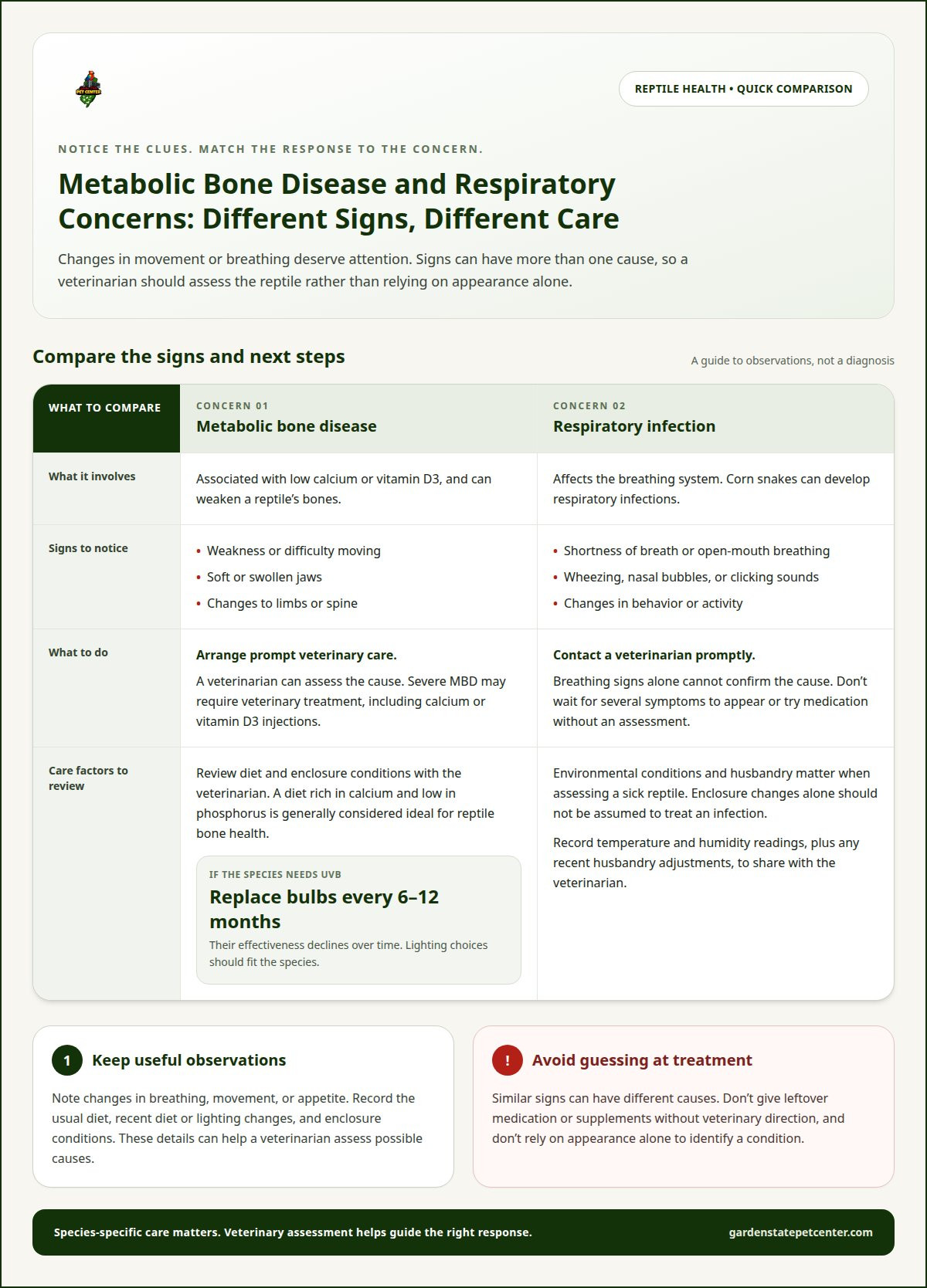
Metabolic bone disease (MBD) is associated with low calcium or vitamin D3 and can weaken a reptile’s bones. Suspected MBD needs prompt veterinary care and husbandry changes. If a lizard refuses food for more than a few days, arrange veterinary evaluation, unless seasonal inactivity is normal for its species.
Signs can include weakness, difficulty moving, soft or swollen jaws, and limb or spine changes. These signs can have other causes, so a veterinarian should assess the reptile rather than relying on appearance alone. Severe MBD may require veterinary treatment, including calcium or vitamin D3 injections. Handle a suspected case gently, and remove climbing objects to reduce the risk of falls and fractures.
Review the animal’s diet and enclosure with the veterinarian. A diet rich in calcium and low in phosphorus is generally considered ideal for reptile bone health. Lizards that need UVB should receive suitable lighting, and bulbs should be replaced every 6-12 months because their effectiveness declines over time. Species-specific reptile care supplies can support a properly arranged habitat, but lighting and diet choices must fit the species.
Parasites and infections can cause illness, appetite changes, or weakness. If internal parasites are suspected, a veterinarian may test a fecal sample and prescribe medication based on the findings. Don’t give leftover medication or supplements without veterinary direction. Symptoms that resemble nutritional disease may have another cause and require a different response.
Inclusion Body Disease (IBD) is another concern for snake owners. If IBD is suspected, keep the affected snake separate from other reptiles while a veterinarian assesses the situation and advises on next steps. Avoid sharing enclosure tools between animals, and wash tools before reuse. A veterinarian can advise on testing and appropriate isolation for the household’s reptiles.
Reptile owners should also consider zoonotic infections, including Salmonella. Wash your hands thoroughly with disinfectant soap after handling reptiles or cleaning enclosures. Keep reptiles and their supplies away from food-preparation areas, and don’t eat or put anything in your mouth while working with them. These habits help reduce exposure risks for people in the home.
When troubleshooting common reptile health issues, note changes in eating, movement, and enclosure conditions before a veterinary visit. Record the animal’s usual diet and recent adjustments, including changes to lighting or habitat. These details help the veterinarian assess possible causes and choose appropriate care.
Can corn snakes get respiratory infections?
Yes, corn snakes can develop respiratory infections. Changes in breathing, behavior, or activity deserve attention because reptiles may show illness through subtle shifts.
Respiratory Infections
A respiratory infection affects a reptile’s breathing system and may interfere with normal activity. Corn snakes can be affected, but signs alone cannot confirm the cause. Environmental conditions and husbandry matter when assessing a sick reptile, but don’t assume enclosure changes will treat an infection. Veterinary evaluation helps distinguish respiratory disease from other problems with similar signs.
Respiratory Warning Signs
Watch for shortness of breath, open-mouth breathing, wheezing, nasal bubbles, or clicking sounds. These signs may indicate respiratory disease in a lizard, and breathing changes in a snake also warrant attention. Note when signs began and whether behavior or activity changed. Contact a veterinarian promptly rather than waiting for several symptoms to appear or trying medication without an assessment.
Keep observations specific. Record whether breathing changes happen at rest, during handling, or after activity, and note changes in appetite or movement. Describe the enclosure’s temperature and humidity readings, along with recent husbandry adjustments. This information can help a veterinarian assess the animal’s condition and identify environmental factors that may need attention.
Adenovirus infection is a separate concern in lizards. Recovered lizards that had adenovirus infection should be quarantined for at least 3 months. Keep that animal apart from other lizards during quarantine, and avoid sharing equipment between enclosures. Ask the veterinarian managing the case how to handle care and cleaning during this period.
Scale rot and other skin infections also require veterinary attention. Changes to a snake’s scales or a lizard’s skin can have different causes, so appearance alone cannot establish a diagnosis. Note the affected area and any changes over time, then share your observations with the veterinarian. Avoid household products or leftover medication, which may complicate assessment.
Respiratory disease, adenovirus, and skin problems require different evaluations. A veterinarian may consider the animal’s species, symptoms, enclosure conditions, and exposure to other reptiles. If several reptiles share a room, track which animals show signs and when symptoms began. This timeline can help clarify whether illness may be affecting more than one animal.
For corn snakes, don’t dismiss repeated breathing changes as ordinary behavior. Describe the sounds or visible effort, review recent husbandry changes, and arrange veterinary assessment. For lizards recovering from adenovirus, maintain the 3-month quarantine period and follow the veterinarian’s care directions.
What Causes Health Problems in Lizards?
Many illnesses in captive lizards are associated with husbandry, including housing, feeding, and management. A veterinary assessment can help determine whether a concern relates to those conditions or requires a different medical response. The cause matters: changing food or enclosure conditions alone may not address the problem.
In the United States, the cost of a reptile veterinary visit and diagnostic testing varies with the examination and tests involved. A fecal exam, blood work, and radiographs are distinct diagnostic tools, so the tests selected affect the total. No single combination of tests applies to every lizard.
Seek emergency veterinary attention if a lizard has pronounced difficulty breathing, suddenly becomes weak, or declines rapidly. Call the clinic, describe the change, and ask how to transport the animal safely. For less sudden concerns, share the lizard’s history and arrange an appointment instead of trying medication or supplements intended for another species.
Veterinarians may use fecal exams, blood work, and radiographs to investigate lizard health problems. A fecal sample can help assess suspected internal parasites, while blood work and imaging provide different information about the animal’s condition. The veterinarian chooses tests based on the examination and symptoms. If parasites are suspected, testing can help determine whether prescribed medication is appropriate.
Prepare useful background before the appointment. Record the lizard’s species, age if known, usual feeding routine, and recent changes in housing or behavior. Include enclosure temperature readings and substrate details. For example, a lizard that roams indoors may encounter material it can swallow, so tell the veterinarian how it is housed and supervised.
Temperature gradients are another husbandry factor to review. Improper enclosure gradients can compromise a lizard’s immune system. The appropriate range depends on the species, so describe the setup rather than assuming one temperature suits all lizards. Habitat changes may be part of care, but should be based on the animal’s needs and veterinary findings.
Plan regular veterinary checkups, including annual physical examinations. A routine visit lets the veterinarian assess your lizard when no urgent symptom is driving the appointment. Keep records of previous findings and changes in routine. Comparing these details over time can help identify patterns and inform future care.
Follow the veterinarian’s treatment directions and report changes in your lizard’s condition. If medication is prescribed, use it only for the stated animal and purpose. Don’t substitute a vitamin product or treatment meant for another species. Decisions should reflect the lizard’s diagnosis, feeding, housing, and overall health.
What are the most common corn snake health problems?
Enclosure conditions, parasites, and infections can affect a corn snake’s health. Temperature and humidity readings, shedding changes, and visible mites can help identify concerns.
Enclosure Temperature, Humidity, and Lighting
A corn snake’s enclosure needs a measured temperature gradient and suitable humidity. Keep the warm side at 85-88°F and the cool side at 75-80°F; the basking spot can reach 90°F. At night, the enclosure should not fall below 65°F. Use a reliable thermometer and hygrometer to monitor conditions instead of guessing by touch.
Baseline humidity should be 40-60%, rising to 60-70% during shedding. These readings matter because unsuitable conditions can complicate shedding and overall care. Check the enclosure readings regularly, especially after changing heat sources or ventilation. A corn snake’s lighting needs should match its species-specific husbandry requirements.
Preventive Husbandry and Enclosure Care
Consistent enclosure care means checking conditions and removing waste before it accumulates. Spot-clean the enclosure daily, removing waste, leftover food, and debris. Provide at least two hides, one on the warm side and one on the cool side, so the snake can shelter while choosing its preferred temperature.
Track temperature and humidity readings alongside feeding and shedding observations. This record can show whether a change in care coincides with a health concern. If a corn snake regurgitates, correct any obvious husbandry issue and wait a week or two before offering food again. Repeated regurgitation or other signs of illness require veterinary attention.
Snake Mites and Enclosure Treatment
Snake mites are small external parasites, and most reptile mites are less than 1.5 millimeters long. Their size can make them difficult to notice, so inspect the snake and enclosure carefully if you suspect an infestation. Mites and other parasites require different responses, and appearance alone cannot establish the cause.
If you suspect mites or parasites, arrange a veterinary evaluation. A veterinarian can assess the snake and determine whether testing or medication is needed; suspected internal parasites may require a fecal test. Don’t apply household cleaners, pesticides, or leftover medication to the animal or enclosure. Treatment and cleaning should be appropriate for the identified parasite.
Quarantine and Enclosure Hygiene
Quarantine means keeping a new reptile separate from existing animals before introducing them. Keep a new corn snake isolated for at least one month, with separate enclosure equipment to limit possible disease transmission. This separation also gives you time to observe changes in eating, activity, or shedding before animals share space.
Daily spot-cleaning supports enclosure hygiene by removing waste and uneaten food. Wash your hands after cleaning, and don’t move tools between enclosures without cleaning them. If your corn snake develops nasal discharge, breathing changes, or unusual inactivity, note when the signs began and contact a veterinarian. These details can help guide the assessment.
Treatment of common lizard health problems
Treatment depends on the cause, so a lizard’s symptoms need careful assessment before you try remedies. Coccidial parasites, constipation, and retained skin require different responses. Breathing difficulty, marked swelling, or worsening weakness calls for prompt veterinary attention, not experiments with supplements or household treatments.
For suspected coccidiosis, a veterinarian can test a fecal sample and prescribe medication. Treatment for coccidial organisms may take 2 to 4 weeks. Even under the best conditions, treatment eliminates them in only 50% of cases. Follow the prescribed plan and cleaning directions, since contaminated food, water, and enclosure surfaces can contribute to continued exposure.
During coccidial treatment, clean the enclosure thoroughly each day. Remove feces and uneaten food, and replace contaminated water. Remove food insects and other food items daily as well. Keep feeding and cleaning notes so the veterinarian can track changes in appetite, stool, or activity during treatment.
Constipation requires attention to hydration and husbandry. Keep fresh water available, and mist the enclosure as needed for the species. Don’t give oils, laxatives, or human medication without veterinary direction. A lizard with straining, reduced stool, swelling, or reduced appetite needs assessment because an obstruction and dehydration require different care.
Retained skin can be addressed with humidity adjustments or soaking, but first consider the lizard’s species and the reason shedding failed. A soak for retained skin is described at 77°F to 85°F (25°C to 29°C) for several hours. A humidity chamber can use a 10-gallon aquarium, an undertank heater, and wet bath towels. Ask a reptile veterinarian how to use these approaches safely for the individual animal.
Don’t pull off retained skin or eye caps. Forceful removal can injure delicate tissue, while stuck shed around toes or the tail can impair circulation. A veterinarian can assess whether the skin needs removal and whether low humidity, dehydration, or another health problem contributed. Addressing the underlying husbandry issue can help prevent repeat shedding trouble.
Nutritional changes should be specific to the species. A lizard’s diet depends on its species and life stage, so adding calcium, vitamin products, or new foods without guidance can create an imbalance. Bring the current feeding routine and enclosure details to the veterinary visit. This information helps distinguish a dietary concern from parasites or another illness.
For habitat supplies that support species-appropriate husbandry, explore reptile care options. Veterinary diagnosis and prescribed treatment remain essential for serious symptoms, including labored breathing, significant swelling, or ongoing refusal to eat.
Garden State Pet Center: Reptiles and Amphibians
Reptile care varies by species, so habitat and daily routines should be planned around the animal’s needs. When considering habitat options, have details about your reptile’s species, current enclosure, and routine available. These details can help guide decisions about suitable care.
Thoughtful nutrition and a well-maintained habitat support daily care, but products do not diagnose or treat illness. If your reptile has trouble breathing, stops eating, or shows swelling or unusual weakness, seek veterinary care for assessment and treatment. For non-urgent questions about supplies or habitat needs, contact Garden State Pet Center for help.
Build a Care Routine That Works
A steady care routine makes it easier to notice changes before they become part of the background. Keep a simple record of your reptile’s usual behavior, appetite, and habitat readings. Bring that context to veterinary appointments and follow the treatment plan if a health concern arises. This preparation gives you a clearer starting point for troubleshooting common reptile health issues without relying on guesswork.
For everyday care, choose habitat supplies and nutrition suited to your reptile’s species and needs. Garden State Pet Center can help you consider suitable reptile products and practical care options. Products can support husbandry, but they don’t replace veterinary assessment when an animal is ill.
If you’d like help thinking through appropriate supplies for your reptile, contact Garden State Pet Center. A thoughtful next step can make daily care feel more manageable, and help you stay prepared for your animal’s changing needs.
Frequently Asked Questions
How do I know if my corn snake is sick?
Compare its behavior with its usual routine, while accounting for normal feeding intervals. Adult corn snakes are fed every 10-14 days, while juveniles are fed every 5-7 days, so a gap between meals alone may not indicate illness. Avoid handling a corn snake for 48-72 hours after feeding. Note changes outside its normal pattern and share those observations with a reptile veterinarian.
What causes retained shed in corn snakes?
Enclosure humidity is one factor to consider, but recurring shedding problems call for a broader review of the snake’s care. Record when shedding occurs and whether skin remains in particular areas. This pattern can help a veterinarian assess the issue. Don’t peel off retained skin or eye caps; forceful removal can injure delicate tissue.
When Should You Bring Your Lizard to the Vet?
Contact a veterinarian promptly if your lizard’s condition is changing quickly or you’re unsure whether a symptom can wait. Before transport, call the clinic, describe the concern, and ask how to keep the animal secure during the trip. Bring relevant care and feeding information. This helps the veterinary team prepare without delaying assessment to gather details later.
What are common signs of illness in pet reptiles?
Look for a noticeable change from an individual animal’s normal routine rather than relying on one universal sign. Compare your reptile’s usual movement and feeding behavior with what you observe now. Write down when the change began and whether it continues. These details help a veterinarian assess the animal, but they cannot establish a diagnosis at home.
What causes metabolic bone disease in reptiles, and how is it treated?
Metabolic bone disease is associated with low calcium or vitamin D3. Avoid feeding reptiles a diet based largely on dog, cat, or primate food, since high vitamin D can contribute to harmful mineralization in the body. Suspected disease needs veterinary assessment, not a guessed supplement dose. The veterinarian can evaluate the animal’s diet and care before recommending an appropriate treatment plan.
What causes respiratory infections in reptiles, and what are the symptoms?
Husbandry and environmental conditions matter when assessing respiratory concerns, but symptoms alone don’t reveal the cause. Make a brief timeline of when breathing changes began and note recent enclosure adjustments. Share those details with the veterinarian rather than trying medication at home. A clear history can help the veterinary team decide what further assessment is appropriate.
What are common causes of stuck shed and how can I help safely?
Review habitat conditions for your reptile’s species and keep notes about recurring shedding problems. Avoid pulling skin away, especially around delicate areas such as the eyes. If retained skin appears repeatedly or you’re unsure how to manage it safely, ask a reptile veterinarian to assess the animal. A record of affected areas and timing can make that discussion more useful.
How do temperature, humidity, and UVB problems affect reptile health?
Reptiles have different habitat requirements, so one enclosure setup cannot serve as a safe template for every species. For a lizard that requires UVB, replace bulbs every 6-12 months because their effectiveness declines over time. Check the care requirements for the specific species and life stage, and discuss persistent health concerns with a veterinarian rather than treating lighting changes as a medical diagnosis.

Article by
Victor Santucci
Victor Santucci Jr. is the owner of Garden State Pet Center and a Certified Clinical Pet Nutritionist specializing in premium pet nutrition, raw and fresh feeding, holistic pet wellness, birds and exotic animals. Through years of hands-on retail and animal-care experience, Victor helps pet parents make informed decisions about nutrition, enrichment and species-appropriate care.
Share this post
- 0 comment
- Tags: lizard care, metabolic bone disease, reptile health, reptile husbandry, reptile illness, respiratory infections, snake care, troubleshooting common reptile health issues