

Exotic Birds: The Complete 2026 Guide to Selection, Care, and Lifelong Companionship


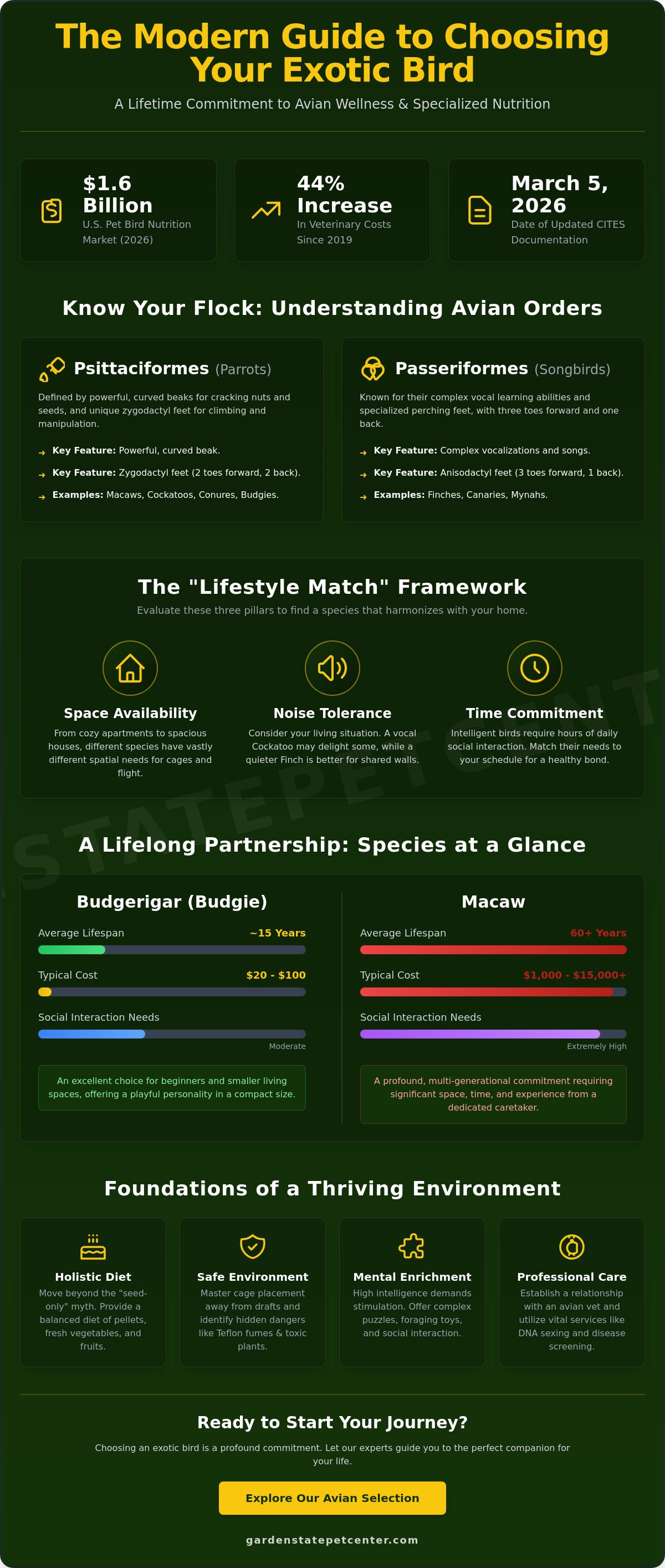
Did you know that the pet bird nutrition market in the United States has reached a staggering $1.6 billion as of 2026? This massive investment shows that owners are moving away from basic care and toward a deeper focus on longevity. You likely already understand that welcoming exotic birds into your home is a profound commitment that requires more than just a cage and a bag of seed. It is completely normal to feel anxious about the 44% increase in veterinary costs seen since 2019 or the complex CITES documentation requirements that updated on March 5, 2026.
We are here to help you navigate these changes with the confidence of a seasoned partner. Discover everything you need to know about choosing, feeding, and caring for your avian friend from a perspective of expert health and specialized nutrition. We'll compare popular species, outline a holistic diet to maximize lifespan, and show you how to build a safe, enriching habitat that minimizes stress for both you and your bird.
Key Takeaways
- Identify the distinct differences between Psittaciformes and Passeriformes to better understand your bird's unique cognitive and social requirements.
- Utilize our "Lifestyle Match" framework to choose a species that fits your home's noise tolerance and space availability.
- Move beyond the "seed-only" myth by learning to provide a holistic diet that fuels the long-term health of exotic birds.
- Secure your bird's environment by mastering cage placement and identifying hidden household dangers like Teflon fumes and drafts.
- Streamline your care routine with expert insights on grooming, disease screening, and the vital role of Avian DNA Sexing.
What Defines an Exotic Bird? Understanding Avian Intelligence and Needs
The term "exotic" often conjures images of vibrant colors and distant jungles; however, for the modern pet owner, it represents a specific biological reality. Unlike dogs or cats that have undergone thousands of years of domestication, exotic birds remain essentially wild animals with high cognitive functions. These birds possess advanced problem-solving skills and a level of self-awareness that rivals primates. Their intelligence isn't just a curiosity. It's a fundamental part of their biology that dictates how they interact with their environment and their human caretakers.
Understanding the biological classification is the first step in providing expert care. Scientists primarily divide these companions into two groups: Psittaciformes and Passeriformes. Psittaciformes, which include the wide variety of parrots, are defined by their powerful, curved beaks and zygodactyl feet, where two toes point forward and two point backward. Passeriformes, or songbirds, are known for their complex vocalizations and specialized perching feet. To gain a deeper perspective on What Defines an Exotic Bird?, one must look at how their unique feather composition and beak structure evolved for survival in diverse global ecosystems.
To see these incredible social bonds in action, watch this look at a dedicated avian home:
Living with these animals requires a shift in perspective. Because they aren't domesticated, they don't instinctively seek to please humans like a golden retriever might. Their behaviors are rooted in survival and flock dynamics. This "wild" nature means their dietary and environmental needs are highly specialized. If you are looking to start your journey, browsing a premium selection of exotic birds is just the beginning of a lifelong commitment to their physiological health.
The Psychology of Exotic Birds
Parrots are incredibly sentient beings with long-term memories and deep emotional intelligence. They don't just want attention; they require social bonding to thrive. In the wild, most species spend 24 hours a day with their flock. When kept as companions, mental stimulation becomes a biological necessity rather than an optional hobby. Without complex puzzles and social interaction, these intelligent creatures can develop stress-related behaviors. We view them as partners in a relationship that requires patience and empathy.
Common Species Overview
The spectrum of companion birds is vast. It ranges from the small, energetic budgie to the majestic and powerful Macaw. Cockatoos are famous for their intense emotional bonds, while Finches offer a more observational but equally rewarding experience. Medium-sized birds like Conures and Senegals often provide a balance of playfulness and manageable space requirements. An exotic bird is a non-domesticated avian species that requires specialized environmental control and advanced nutritional management to maintain its well-being in a home setting.
Selecting Your Ideal Exotic Bird: A Guide to Species and Temperament
Choosing a companion from the diverse world of exotic birds requires more than an appreciation for vibrant feathers. It demands an honest assessment of your daily life. We recommend a "Lifestyle Match" framework that evaluates three specific pillars: space, noise tolerance, and time. You aren't just buying a pet; you're entering a partnership that can last from 15 to over 60 years. For instance, while a small Budgerigar might cost between $20 and $100 and live 15 years, a Macaw can require an investment of up to $15,000 and live for six decades. This long-term commitment is the most critical factor to consider before you bring a new friend home.
Your living environment dictates which species will thrive. If you live in an apartment, a vocal Cockatoo might lead to noise complaints, whereas a quieter Finch or Cockatiel could be a perfect fit. Time is another non-negotiable. High-intelligence birds require hours of daily interaction to prevent boredom and stress. If your schedule is packed, a more independent species might be better. To help you find the right fit, you can browse our expertly curated selection of exotic birds and consult with our team about which temperament aligns with your home life.
Small and Medium Birds for Beginners
Cockatiels and Green Cheek Conures are excellent entry-level companions for those new to avian care. Cockatiels are generally gentle and affectionate, making them ideal for families. Conures are bolder and more playful, often described as "big parrots in small bodies." While these birds are smaller, they still require flight cages rather than cramped enclosures to maintain their physical health. They offer a manageable introduction to the social needs of birds without the overwhelming physical demands of larger species.
Large Parrots and High-Level Commitment
Species like African Greys and Cockatoos represent the peak of avian intelligence and commitment. African Greys, which can cost up to $7,075, are famous for their cognitive abilities but can become "one-person birds" if you don't socialize them with multiple people. Cockatoos require intense emotional bonding and can be quite loud. These large birds have significant destructive potential if their powerful beaks aren't engaged with proper toys. Supporting their vitality also requires specialized knowledge, such as understanding Advanced Nutrition: Fueling Avian Vitality with Holistic Diets to ensure they live their longest, healthiest lives.
Advanced Nutrition: Fueling Avian Vitality with Holistic Diets
Many owners still believe that a simple bag of seeds is sufficient for their feathered friends. This is a dangerous misconception that frequently leads to malnutrition and chronic health issues. In the wild, exotic birds spend up to 80% of their waking hours foraging for a diverse array of nutrients. A diet consisting only of seeds is often too high in fat and lacks essential vitamins like A and D3. This nutritional imbalance is a primary contributor to fatty liver disease. Transitioning your bird to a balanced, modern regimen is the most impactful step you can take for their longevity.
A truly holistic diet mirrors the complexity of a bird's natural environment. We recommend a foundation of high-quality pellets, supplemented heavily with fresh produce and healthy fats. Incorporating raw and freeze-dried options helps mimic natural foraging behaviors; it keeps their minds active while they eat. As of 2026, monthly food costs for a well-maintained bird typically range from $50 to $150. To learn more about selecting the right products for your companion, explore our comprehensive guide on Premium Pet Food.
The Foraging Diet Framework
The best way to provide fresh nutrients is through "chop." This is a finely diced mixture of bird-safe vegetables like kale, carrots, and bell peppers. Preparing a large batch once a week makes daily feeding efficient and ensures your bird receives a variety of micronutrients. You must be vigilant about toxic foods; avocado, chocolate, and caffeine are lethal to birds and should never be in their reach. Holistic avian nutrition is a strategic balance of macronutrients and psychological engagement that promotes both physical longevity and mental well-being.
Supplements and Specialized Feeding
While a balanced diet provides most nutrients, certain life stages require extra support. We often recommend bird vitamins and calcium supplements during molting or egg-laying periods to prevent physical depletion. Water hygiene is another critical pillar of health. Clean, filtered water must be provided in bowls that are scrubbed daily to prevent bacterial buildup. If you feel overwhelmed by these requirements, don't hesitate to book a pet nutritional consultation. Our experts can create a custom plan tailored to your bird's specific species and health history. We are here to ensure your companion receives the trusted care they deserve.
Creating a Thriving Environment: Cages, Enrichment, and Social Needs
Setting up a home for exotic birds requires a shift in how we view domestic space. We advocate for the "Cage as a Bedroom" philosophy. This means the enclosure is a secure sanctuary for sleeping and eating, but it isn't where the bird spends their entire life. Restricting a highly intelligent creature to a small box 24/7 leads to psychological decline. Instead, envision your home as a shared ecosystem where your bird has dedicated, safe flight zones for daily exercise and exploration.
Cage placement is a matter of life and death. You must keep enclosures away from kitchens because of the dangers of Teflon and other non-stick coatings. When heated, these release PTFE fumes that are instantly fatal to avian respiratory systems. Similarly, avoid placing the cage in drafty areas or direct, unshaded sunlight. Within the cage, provide perches of varying diameters and textures. Using only uniform plastic or dowel perches causes pressure sores known as bumblefoot and can lead to early-onset arthritis. Natural wood perches help exercise the feet and keep nails naturally trimmed.
Enrichment and Mental Health
Enrichment is a biological requirement for all exotic birds. We categorize toys into three essential groups: shreddable items for natural chewing, puzzle toys for cognitive growth, and comfort toys for security. Foraging toys are particularly vital. They simulate the natural behavior of searching for food, which significantly reduces boredom-based habits like feather plucking. You can browse our Pet Toys and Accessories to find options that challenge your bird's problem-solving skills. Ensure your bird has at least 3 to 4 hours of supervised out-of-cage time in a bird-proofed room free of ceiling fans and open water.
Social Dynamics and Training
Your bird views you as part of their flock. Using positive reinforcement training, such as clicker training with healthy treats, builds a bond based on trust rather than fear. Setting boundaries is equally important to prevent over-bonding, which can lead to aggression toward other family members or excessive screaming. Pay close attention to light cycles. Birds require 10 to 12 hours of uninterrupted darkness every night. This consistent sleep schedule is the most effective way to manage hormonal behaviors and maintain a calm, happy companion. Visit our store to shop premium bird cages and enclosures that provide the space and security your companion deserves.
The Professional Care Cycle: Grooming, Health, and Boarding
Maintaining the long-term well-being of exotic birds requires a proactive schedule that goes beyond daily feeding. Routine grooming is not merely about appearance; it is a vital part of preventative medicine. For example, overgrown nails can snag on toys or cage bars, leading to fractured legs or painful bleeding. Beak maintenance is equally critical to ensure your companion can properly manipulate their food and engage in natural foraging. We recommend professional bird grooming services to safely handle tasks like nail trimming and wing clipping. Experts know how to avoid blood feathers and keep stress levels low during these essential sessions.
A major gap in many care plans is understanding the bird's biological sex. Since many species are not sexually dimorphic, you can't tell if a bird is male or female just by looking at their feathers. This is why Avian DNA Sexing is such a critical tool for responsible owners. Knowing the gender helps you anticipate hormonal behaviors and watch for specific health risks like egg binding or calcium depletion in females. It's a simple, one-time test that provides lifelong clarity for your bird's behavioral and medical management.
Health Screening and Disease Prevention
Birds are masters of the "masking phenomenon." As prey animals, they instinctively hide signs of illness until they are severely debilitated. This makes regular health screening mandatory to catch issues before they become life-threatening. While an initial avian vet visit in 2026 typically costs between $115 and $235, these exams are the only way to detect silent infections or organ dysfunction. Avian disease screening is a proactive measure for multi-bird households that prevents the spread of pathogens through your entire flock. We always prioritize prevention over emergency intervention.
Safe Boarding for Exotic Species
When you travel, choosing a professional facility is significantly safer than hiring a standard pet sitter. Exotic birds have sensitive respiratory systems and complex social needs that most general sitters aren't trained to handle. A trusted boarding center offers specialized avian knowledge and high-end ventilation systems designed to prevent the spread of airborne illnesses. Before you book a stay, check out our Expert Pet Boarding guide to learn how to prepare your companion for their trip. Bringing familiar toys and maintaining a consistent schedule will help minimize stress and ensure your bird feels secure while you're away.
Embark on Your Avian Journey with Confidence
Welcoming exotic birds into your family is a profound decision that transforms your home into a vibrant, living ecosystem. Success starts with moving beyond outdated care habits and embracing a holistic approach to nutrition and social enrichment. You now have the tools to match a species to your specific lifestyle and understand the critical role of proactive health measures like DNA sexing. These steps ensure your companion doesn't just live but truly thrives for many years to come.
At Garden State Pet Center, we've provided trusted expert care since 1990. Our team includes a Certified Pet Nutritionist on-site to help you design a specialized diet that fuels long-term vitality. We also offer specialized avian DNA and disease screening services to give you complete peace of mind from the very first day. Discover our trusted selection of exotic birds and premium supplies and take the first step toward a rewarding lifelong partnership. We're excited to welcome you and your new feathered friend into our local community.
Frequently Asked Questions
What are the best exotic birds for beginners?
Budgerigars and Cockatiels are the most recommended species for first-time owners. These birds are socially adaptable and require less physical space than larger parrots. Their temperaments are generally gentle; this makes them excellent companions for learning the basics of avian behavior and nutrition without the overwhelming demands of larger species.
How long do exotic birds live in captivity?
Lifespans for exotic birds vary significantly by species size and the quality of their daily care. Smaller birds like Budgies often live 10 to 15 years, while medium species like Conures can reach 25 to 30 years. Large parrots, such as Macaws or Cockatoos, represent a lifelong commitment that frequently exceeds 60 years in a stable home environment.
Is it expensive to keep an exotic bird?
The total monthly cost of ownership can reach up to $400 when including high-quality food, enrichment, and specialized healthcare. With veterinary care inflation rising 44% between 2019 and early 2025, owners must budget for both daily supplies and emergency exams. Proper nutrition alone typically costs between $50 and $150 every month depending on the bird's size.
Can exotic birds be left alone during the day?
Birds shouldn't be left alone for more than 4 to 6 hours without significant mental stimulation and enrichment. As flock animals, they require consistent social interaction to prevent stress and destructive behaviors like feather plucking. If you work a full day, you must provide advanced foraging toys and a consistent routine to maintain their psychological health.
How do I know if my bird needs to see a specialist?
You should consult an avian specialist immediately if you notice any changes in droppings, appetite, or energy levels. Because birds hide illness until it is advanced, even a 10% drop in daily activity can indicate a serious medical issue. Annual wellness exams and proactive disease screening are the best ways to catch silent infections before they become life-threatening.
What is the most intelligent type of exotic bird?
African Greys are widely considered the most intelligent exotic birds due to their advanced mimicry and complex problem-solving skills. Research indicates they possess the cognitive reasoning and emotional depth of a 5-year-old human child. This high intelligence means they require constant mental challenges and puzzle toys to stay engaged and happy.
Do exotic birds require specific lighting or humidity?
Most species require 12 hours of full-spectrum UV lighting daily to properly synthesize Vitamin D3 and calcium. Humidity levels should stay between 40% and 60% to support healthy skin and feather condition. Tropical species especially benefit from regular misting or bird-safe humidifiers to prevent respiratory dryness and feather brittleness in a home environment.
How often should I have my bird professionally groomed?
Professional grooming is typically required every 4 to 8 weeks depending on the individual bird's activity level and species. This schedule ensures that nails don't become sharp enough to cause injury and that beak growth remains manageable. Regular sessions also allow an expert to check for any physical abnormalities or new feather growth that might need attention.
Share this post
- 0 comment
- Tags: exotic birds