


Natural Reptile Substrate Bedding for Humid Habitats


The right natural reptile substrate bedding for a bearded dragon isn’t necessarily right for a tropical gecko. Choose a dry option suited to an arid habitat, and don’t assume that every loose substrate works for every reptile.
Natural-looking bedding can support behaviors such as burrowing, but it also needs to stay clean and manageable. Match the substrate to the animal’s habitat: moisture-retaining materials can suit humid environments, while dry setups call for different choices.
This guide compares substrate considerations for bearded dragons, humid enclosures, and bioactive terrariums. You’ll learn how bedding affects moisture, cleaning, and behaviors such as burrowing and foraging, along with practical ways to assess natural materials. The goal is to choose for your reptile’s specific setup, not to treat one substrate as a universal solution.
Key Takeaways
- Match bedding to your reptile’s natural habitat: a bearded dragon’s dry setup calls for different materials than a moisture-loving tropical enclosure.
- Coconut coir can help retain humidity, but its condition matters when you’re maintaining a humid habitat.
- For a bioactive terrarium, consider how the substrate supports plants and the small organisms that help break down waste.
- Choose materials and a cleaning routine that support natural behaviors while keeping the enclosure manageable.
- Use the animal’s habits and the enclosure’s moisture levels to guide your choice, rather than relying on one substrate for every species.
Q4: Is coconut husk substrate safe for reptiles?
Coconut husk can suit reptiles that need a slightly moist habitat, including tortoises, because it absorbs moisture and helps maintain humidity. It is not suitable for every setup, so match its texture and moisture level to the species and enclosure.
Coconut Coir Moisture Retention
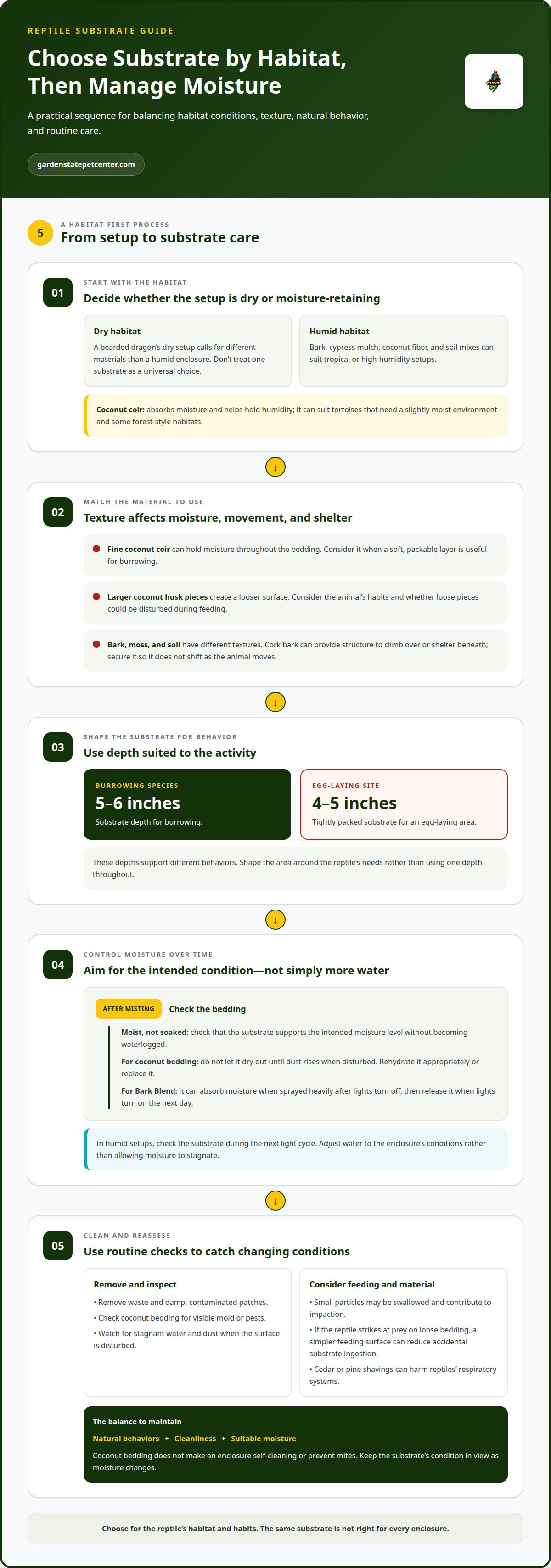
Coconut coir, also called coco coir or coconut fiber, absorbs moisture and helps hold humidity. It can suit tortoises that need a slightly moist environment and some forest-style habitats. After misting, check that the material supports the intended moisture level without becoming waterlogged. Humidity management means controlling moisture, not simply adding more water.
Coconut coir is described as 100% natural and renewable. Coconut husk bedding should not be left to dry out, because it can become dusty. Keep the substrate’s condition in view as the enclosure’s moisture changes. If the bedding dries and dust rises when disturbed, rehydrate it appropriately or replace it rather than allowing loose dust to build up.
Coconut Fiber and Husk Bedding
Coconut fiber bedding and coarser coconut husk pieces have different textures, although both come from coconut. Fine coir can hold moisture throughout the bedding, while larger husk pieces create a looser surface. Consider whether the reptile needs a soft, packable layer for burrowing or a more open texture. For example, coir that holds moisture may suit a tortoise using a humid area.
How deep should reptile substrate be for burrowing and nesting? Burrowing species need a depth of 5-6 inches, while an egg-laying site calls for 4-5 inches of tightly packed substrate. These depths support different behaviors, so shape the area around the reptile’s needs rather than using one depth throughout.
For a substrate choice that suits the whole enclosure, browse reptile habitat options alongside the animal’s needs. Keep coconut bedding away from food and water dishes when loose pieces could be disturbed during feeding.
Potential Substrate Health Concerns
Can natural reptile substrate cause impaction, mold, mites, or respiratory problems? Small particles may be swallowed and contribute to impaction, while dry coconut husk can become dusty. Moisture that stays trapped can encourage mold, and cedar or pine shavings can harm reptiles’ respiratory systems.
During routine spot-cleaning, remove waste, check coconut bedding for visible mold or pests, and notice whether dust rises when you disturb the surface. These checks can reveal changes in the enclosure, but coconut bedding does not make it self-cleaning or prevent mites. Remove damp, contaminated patches and prevent moisture from stagnating.
Consider particle size and feeding habits together. If a reptile strikes at prey on loose bedding, a simpler feeding surface can reduce accidental substrate ingestion. In humid habitats, maintain moisture without soaking the coconut layer; in dry areas, prevent it from becoming dusty. These adjustments help balance burrowing opportunities, cleanliness, and respiratory comfort.
Reptile bark for humid environments
Bark, cypress mulch, coconut fiber, and soil mixes can suit tropical or high-humidity setups. Choose based on the reptile’s habitat and how the material manages moisture, not on the assumption that all bark substrates work alike. A humid enclosure with plants, for example, has different needs from a dry bearded dragon habitat.
Bark can add texture to a humid terrarium, while moss and soil can form part of a moisture-retaining blend. Avoid letting water stagnate in the substrate. After misting, check that the bedding is moist rather than soaked, and adjust the water to the enclosure’s conditions.
Cork bark can give a lizard structure to climb over or shelter beneath. Secure it so it doesn’t shift as the animal moves, and consider whether the hiding space suits its habits. A piece of cork bark can create shelter while leaving room for plants and movement.
Bark, moss, and soil blends are worth considering for tropical habitats where humidity is part of the setup. Each material has a different texture, so consider how the animal uses the enclosure as well as how the substrate holds moisture. For example, moss can go in a humid retreat, while bark and soil provide a broader substrate layer.
Douglas fir bark is one bark-based option to assess for particle size and suitability. The material’s name alone does not mean it fits every reptile. A small lizard that might swallow loose pieces while feeding needs a different assessment from an animal that mainly uses the substrate for movement and cover.
Cypress mulch and bark are among the materials recommended for tropical or high-humidity setups. Bark Blend can absorb moisture when sprayed heavily after the lights turn off, then release it when the lights turn on the next day. This makes the lighting cycle part of moisture management, rather than relying on repeated misting throughout the day.
Manage bark in a humid enclosure with a simple routine: mist as appropriate, then check the substrate during the next light cycle. Remove waste and any areas where water has stagnated. This helps keep bedding clean and prevents unchecked moisture buildup around plants, cork hides, and other enclosure features.
Let the habitat guide your choice. Desert species generally need dry conditions, so bark intended for humid enclosures is not a default choice. For a tropical lizard, compare bark, cypress mulch, and soil blends by how they hold moisture and how the animal uses its space.
Q7: What substrate works best for a bioactive terrarium?
A bioactive terrarium needs substrate suited to the animal, plants, and moisture requirements. For tropical species, sphagnum moss and a suitable soil mix can help create a humid, planted habitat.
Sphagnum Moss for Humidity
Sphagnum moss helps retain moisture in a bioactive enclosure and can be part of a suitable substrate mix. Observe how it holds moisture in the specific terrarium, especially near plants and humid retreats. It should support the habitat without leaving water stagnant. A tropical gecko or amphibian may need different moisture conditions from a species adapted to drier surroundings.
Soil Mixes for Bioactive Habitats
Bioactive enclosures combine live plants, soil, and beneficial invertebrates such as isopods and springtails. These small organisms help break down waste, while plants grow in the substrate. An ABG-style mix uses sphagnum moss, tree fern fiber, orchid bark, peat moss, and charcoal. The proportions are one part sphagnum moss, two parts tree fern fiber, two parts orchid bark, one part peat moss, and one part charcoal.
Use those proportions as an example recipe, not a universal formula for every reptile or amphibian. A tropical terrarium with live plants has different priorities from an enclosure for a dry-habitat animal. Consider the animal’s humidity needs, the plants’ growing conditions, and whether the substrate stays moist without becoming waterlogged.
DIY Natural Substrate Mixes
To make a DIY natural reptile substrate mix, start with the animal’s habitat requirements. Then combine suitable components such as sphagnum moss, tree fern fiber, orchid bark, peat moss, and charcoal using the stated ABG proportions. Set the moisture level for the species and prevent water from stagnating.
The ingredients each have a distinct role: moss and peat help retain moisture, while bark and tree fern fiber add texture. Charcoal is also part of the recipe. Choose the resulting substrate for the animal and plants, not just its appearance. An amphibian in a tropical setup, for example, needs a different environment from a desert species.
A bioactive substrate needs a functioning habitat, not just a blend in the terrarium. Plan for live plants and beneficial invertebrates such as springtails and isopods. They help break down waste, but don’t eliminate the need to monitor the substrate and clean as needed. Check that the mix remains suitable for the animal’s humidity needs and activity.
Before building a terrarium, decide which species will live there and what conditions it needs. Select the soil mix, plants, and moisture level as one connected setup. This makes a bioactive substrate more useful than copying a recipe without considering the animal or habitat.
Substrate roles in humidity, cleanliness, and natural behavior
Substrate affects moisture, cleanup, and how reptiles use their enclosure. A burrowing species needs a different surface from a leopard gecko that mainly moves across it. Choose bedding for the animal’s habitat and habits, then maintain it so waste and excess moisture don’t build up.
For desert species, keep the main habitat dry and provide a humid hide and a clean, filled water bowl. Tortoises may benefit from suitable foraging opportunities, while snakes need a surface that won’t collect in their scales. For geckos, consider how substrate texture affects movement and feeding. One material will not suit every animal equally well.
Substrate can support natural behaviors, too. A deeper layer gives burrowing reptiles room to dig, while leaf litter and suitable plants can add cover to a tropical enclosure. Avoid very small particles where an animal might swallow them while feeding. Loose or fine sand can contribute to impaction if ingested, so consider the reptile’s feeding style and the substrate’s texture.
Rules for collecting natural substrate outdoors can depend on the collection site and who manages the land. Don’t assume you can gather soil, leaves, or bark. Use substrate intended for terrariums, or obtain permission before collecting material from a specific location.
Base cleaning on the enclosure’s condition. Spot-clean visible waste and soiled areas, then inspect damp spots for stagnant moisture. Aspen bedding can develop mold when moisture stays trapped and the material cannot dry. Jungle Mix should remain moist, but not so wet that water stagnates. These examples show why the material’s condition matters as much as its name.
For young animals or messy eaters, simple liners and easy-clean substrates can make spot-cleaning more straightforward and reduce the chance of ingesting loose bedding. A liner can be rinsed with cold tap water. Remove waste promptly, and replace substrate when it becomes contaminated or no longer maintains the intended habitat conditions.
Recommendations for full replacement vary: some suggest two to four weeks, while others advise four to six weeks or monthly changes. These are different guidelines, not one universal timetable. Species, substrate, moisture, and visible contamination all affect maintenance. Damp bedding that develops mold, for example, needs attention rather than waiting for a routine calendar date.
Follow a repeatable routine: remove waste, check for wet or moldy areas, and assess whether the substrate still suits the animal’s behavior. A leopard gecko’s clean, dry area and a tropical turtle’s moisture needs call for different checks. Regular observation connects cleanliness with comfort and natural activity.
Choosing substrate for habitat conditions
Start with the species’ natural habitat, then choose bedding that supports its moisture needs and behavior. Substrate suited to a tropical terrarium may be unsuitable for a desert enclosure.
Matching Substrate to Habitat and Species
For arid setups, dry materials such as sand, aspen, and soft desert bedding can match habitat conditions. Aspen is soft and absorbent, making it an option for snakes from dry or semi-arid environments. Some tortoises can use grass hay to encourage foraging. Choose according to the animal’s typical activity, not appearance alone.
Small particles can be swallowed accidentally, so consider how each animal feeds. Snakes shouldn’t be kept on sand or gravel, which can cause impaction if ingested and may get caught in their scales. For young animals or messy eaters, a simple liner can make spot-cleaning easier and reduce loose bedding around food.
Substrates for Tropical Habitats
Tropical species, including chameleons, geckos, and tree frogs, may suit bioactive habitats with humidity, live plants, and natural cover. Coconut fiber, cypress mulch, bark, and soil mixes are options for tropical or high-humidity setups. Choose a blend that holds moisture without letting water stagnate, and consider whether its texture supports the animal’s movement.
Desert species generally don’t need a bioactive setup because their habitat requires dry conditions, although some geckos can adapt. This distinction matters: a substrate designed for tropical plants and humidity may work against an arid animal’s needs. Match the whole enclosure to the species, including any humid retreat needed within a dry habitat.
Comparing Common Substrate Materials
What are the pros and cons of coconut fiber, cypress mulch, soil, sand, and bark? Coconut fiber and cypress mulch help retain moisture, soil can support plants in bioactive setups, and bark adds texture and cover. Sand may not suit every reptile, so choose a substrate that fits the animal and its habitat.
Each material also has maintenance considerations. Aspen can mold if moisture stagnates and the bedding cannot dry. Jungle Mix should pack when squeezed but release no water. For tropical blends, aim for moist, not waterlogged; for desert bedding, prioritize dry conditions and a clean, filled water bowl.
Think through the enclosure as a whole before settling on a material. A tropical gecko’s planted habitat has different priorities from a snake’s dry, semi-arid setup. Feeding habits, burrowing, moisture, and ease of spot-cleaning all help determine which substrate fits. If you’re planning a habitat, explore reptile habitat options to support your setup.
Garden State Pet Center: Reptiles and Amphibians
Garden State Pet Center offers reptiles and amphibians, along with reptile terrariums, to help you plan a habitat around the space each species needs. Before selecting bedding or setting up a terrarium, consider the animal’s natural habitat, humidity requirements, and behavior.
For a complete care plan, consider the enclosure, substrate, food, and enrichment together. Garden State Pet Center also offers premium pet food, toys, and accessories for other parts of a reptile’s daily care. The right choices depend on the animal and its habitat, so bring your questions to the team.
Contact Garden State Pet Center to discuss your reptile care needs.
Build a habitat you can refine over time
Let your reptile’s behavior guide the next adjustment. Notice where it rests, explores, or avoids the substrate, then consider whether the habitat still supports its routines. A well-chosen natural reptile substrate bedding is part of an ongoing care setup, shaped by the animal’s needs as they become clearer.
Garden State Pet Center’s selection includes premium pet food, toys and accessories, and exotic birds. For reptile-specific guidance and terrarium choices, start a conversation about your animal and the habitat you’re creating. A clear picture of your setup can help focus the discussion on practical next steps.
Contact Garden State Pet Center to talk about your reptile’s habitat and care needs. With a thoughtful approach, you can keep building a space that feels natural and works for your animal.
Frequently Asked Questions
Q1: What’s the best substrate for a bearded dragon?
For a bearded dragon in an arid setup, choose dry bedding suited to desert conditions. A simple, easy-clean surface can be practical for a young animal or messy eater, especially around feeding areas. Avoid very small particles that could be swallowed accidentally. Provide a humid hide and a clean, filled water bowl rather than making the entire habitat damp. Match the bedding to the enclosure’s conditions.
Q3: Can I use moss or forest floor bedding in a terrarium?
Yes, moss or forest-style bedding can suit a terrarium designed for a species that needs humidity. Sphagnum moss can contribute to a bioactive mix, while bark and soil add different textures. Use these materials as part of a habitat plan, not as the default for every reptile. A tropical gecko’s planted enclosure, for example, has different moisture needs from a desert species’ setup.
Q5: What’s the safest bedding for a pet snake?
For snakes from dry or semi-arid environments, aspen shavings are a soft, absorbent option. Avoid sand and gravel, which can cause impaction if swallowed and may get caught in scales. Cedar and pine shavings are also unsuitable because their oils can harm reptiles’ respiratory systems. Consider how your snake moves and feeds, then keep the substrate clear of waste and food debris.
Q6: Why shouldn’t I use cedar or pine shavings for my reptile?
Avoid cedar and pine shavings because their oils can harm a reptile’s respiratory system. This concern applies even if the shavings seem dry or convenient. Choose bedding for your animal’s habitat instead, such as absorbent aspen for some snakes from dry or semi-arid environments. Also consider whether loose pieces could be swallowed during feeding.
Q8: Can I use sand for any desert reptile, or does it vary by species?
Suitability varies by species and feeding behavior; living in a desert habitat alone doesn’t make sand right for every reptile. Loose or fine sand can cause impaction if swallowed, and snakes should not be kept on sand. Consider the animal’s natural habitat and whether it eats directly from the substrate. Dry aspen or soft desert bedding are alternatives to consider for arid setups.
What natural substrates are safe for different reptile species?
Suitable materials depend on the species’ habitat and how it uses its enclosure. Aspen may suit some snakes from dry or semi-arid environments; moisture-retaining coconut fiber, cypress mulch, bark, or soil mixes may suit tropical setups. Some tortoises can use grass hay to encourage foraging. Avoid cedar and pine shavings, and take care with fine particles an animal could ingest.
Which natural reptile bedding best matches a species’ native habitat?
To choose natural reptile substrate bedding, first identify whether the species is adapted to dry or humid conditions. Dry materials such as aspen and soft desert bedding can suit arid setups, while tropical habitats may use coconut fiber, cypress mulch, bark, or soil mixes. Then consider behavior: a burrowing animal needs different bedding from one that mainly uses surface cover.
How often should reptile bedding be spot-cleaned and replaced?
Remove waste and soiled areas during routine enclosure care, and replace bedding sooner if it becomes moldy or stays wet. Full-replacement recommendations vary: some guidance suggests every two to four weeks, other advice gives four to six weeks, and another recommends monthly changes. Treat these as differing schedules, not one universal rule; substrate type, moisture, and visible contamination all affect upkeep.

Article by
Victor Santucci
Victor Santucci Jr. is the owner of Garden State Pet Center and a Certified Clinical Pet Nutritionist specializing in premium pet nutrition, raw and fresh feeding, holistic pet wellness, birds and exotic animals. Through years of hands-on retail and animal-care experience, Victor helps pet parents make informed decisions about nutrition, enrichment and species-appropriate care.
Share this post
- 0 comment
- Tags: bearded dragons, bioactive terrariums, coconut coir, humid habitats, natural bedding, natural reptile substrate bedding, reptile care, reptile substrate