

Bearded Dragon Food: The Complete Buying Guide to Premium Nutrition


Buying the most expensive insects on the market won't save your pet if you're ignoring the biological shift in their nutritional needs. Most owners start with the best intentions, but it's easy to feel overwhelmed by confusing age-appropriate ratios or the fear of accidentally feeding toxic plants. You want a thriving, high-energy companion, yet finding reliable bearded dragon food often feels like a guessing game. We understand those concerns and are here to provide the clinical precision your reptile deserves.
At Garden State Pet Center, we'll help you master the art of bearded dragon nutrition with our expert guide to choosing the best insects, greens, and specialized diets for every life stage. You'll gain the confidence to build a clear feeding schedule and ensure total food safety. This guide previews the essential nutritional foundations, the hierarchy of live protein, and the science behind the perfect salad bowl. Let's ensure your pet thrives with the premium care they need to stay healthy for years to come.
Key Takeaways
- Understand the biological shift from juvenile growth to adult maintenance to ensure your pet receives the right fuel for their life stage.
- Identify high-quality feeder insects and learn why expert sourcing is the best defense against common parasites.
- Build a safer daily salad bowl by distinguishing between nutrient-rich staple greens and occasional toppers that can hinder calcium absorption.
- Discover how to effectively use specialized bearded dragon food and Vitamin D3 supplements to mirror a natural, thriving diet.
- Gain confidence in your food safety protocols by learning to evaluate the freshness and nutritional value of professional-grade diets.
Nutritional Foundations: The Dynamic Diet of a Bearded Dragon
Bearded dragons are biologically classified as opportunistic omnivores. This means their survival in the wild depends on their ability to digest a wide variety of both animal proteins and plant matter. To mirror this resilience in captivity, you must understand The Dynamic Diet of a Bearded Dragon and how it adapts to their environment. Providing a diverse selection of bearded dragon food isn't just about nutrition; it's about mental stimulation. Without a rotating menu of textures and scents, many dragons develop "hunger strikes," where they simply refuse to eat out of boredom or nutritional deficiency.
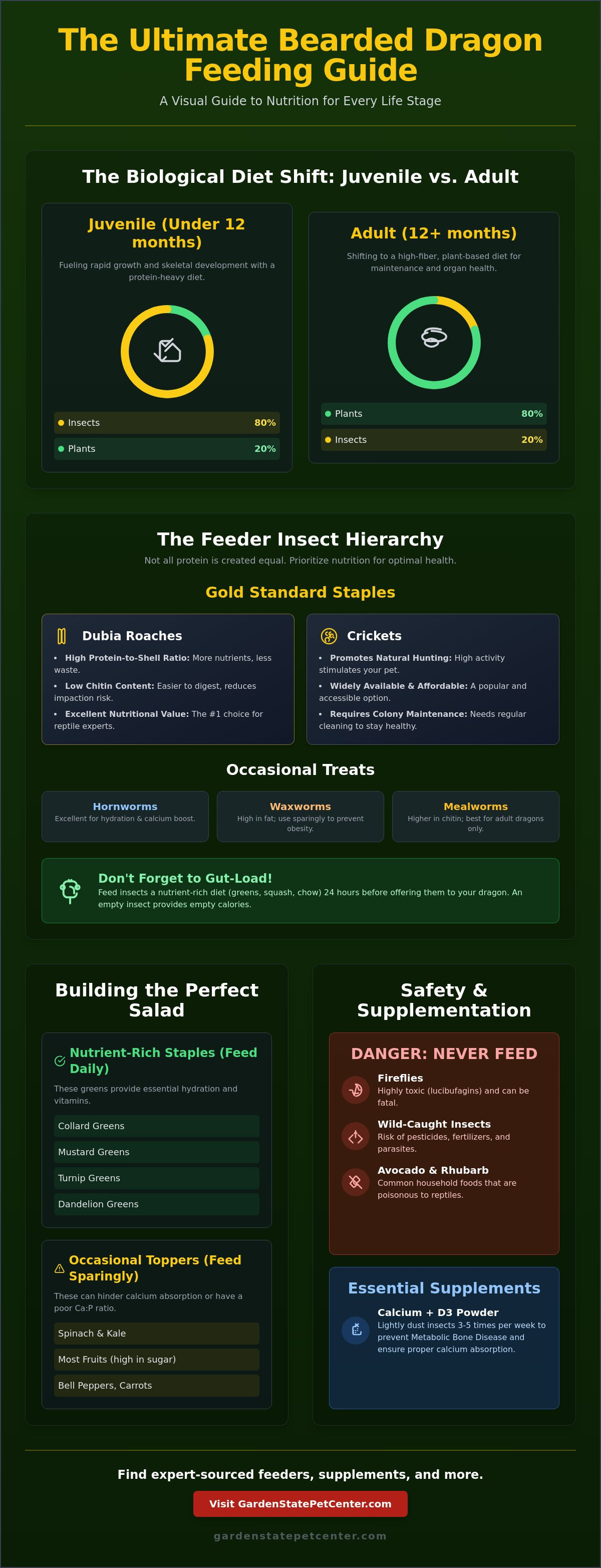
The most significant challenge for owners is managing the biological shift from the juvenile growth phase to adult maintenance. Young dragons have a high metabolic rate and require massive amounts of protein and calcium to support skeletal development. As they reach maturity, their needs pivot toward high-fiber vegetation to prevent obesity and organ stress. While juvenile dragons require a diet of 80% insects and 20% plants to support rapid growth, mature adults must transition to 80% plants and 20% insects to maintain a healthy weight and organ function.
Age-Specific Ratios: From Hatchling to Senior
Hatchlings and juveniles under 12 months are essentially "growth machines." They need frequent feedings of small, high-protein insects to fuel their expanding frames. Once your dragon hits the one year mark, you'll notice a natural slowdown in activity and growth. This is the time to aggressively transition to a plant-heavy diet. Senior dragons or gravid females require specialized care. A female producing eggs needs a temporary boost in calcium and fat, while seniors may benefit from softer bearded dragon food options if they show signs of slowed digestion or joint stiffness.
Hydration and Nutrient Absorption
Hydration is a critical but often overlooked part of reptilian nutrition. Because these are desert species, they've evolved to extract moisture directly from their prey and vegetation. Many dragons don't naturally recognize standing water in a bowl, which makes "wet" greens like mustard, collard, and turnip greens essential. These staples provide a hydration boost while ensuring your pet absorbs the vitamins found in their salads. If you're looking for the right supplies to start your setup, you can Shop our trusted reptile collection for expert-approved enclosures and accessories that help maintain proper health.
Evaluating Live Protein: Choosing the Best Feeder Insects
Protein is the engine of your reptile's growth, but not all insects provide the same fuel. Many beginners assume any bug will do, yet there's a strict hierarchy when selecting bearded dragon food. You should always prioritize nutrition over mere convenience. While it's tempting to grab insects from a local bait shop, these sources often lack the sanitary standards found at a trusted reptile specialist. Substandard colonies can introduce parasites or even pathogens like the Salmonella strains identified in the CDC's November 2025 report directly into your pet's habitat.
To maximize every bite, you must master the art of gut-loading. This process involves feeding your insects a high-nutrient diet of squash, greens, or specialized chow 24 hours before they become a meal. Think of the insect as a nutritional vessel. If the cricket is empty, your dragon is essentially eating empty calories. Safety is equally paramount. Never offer wild-caught insects from your garden. They often carry traces of pesticides or fertilizers. Even more dangerous are fireflies; these contain lucibufagins, which are highly toxic and can be fatal to a dragon in very small amounts.
The Gold Standard: Dubia Roaches and Crickets
Dubia roaches are widely considered the premier choice for captive reptiles. They boast a high protein-to-shell ratio and a much lower chitin content than other feeders, making them easier to digest and less likely to cause impaction. For a deep dive into why these are a favorite among hobbyists, check out our comprehensive guide on Dubia roaches. Crickets remain a popular, affordable alternative, with May 2026 prices averaging around $1.99 for a 20-count. They encourage natural hunting behaviors due to their high activity levels, though they require more maintenance to keep the colony clean.
Treat Insects: Hornworms, Waxworms, and Mealworms
Treats should be used strategically rather than as staples. Hornworms are exceptional for providing a hydration boost and a hit of calcium because of their moisture-rich bodies. You can learn more about their unique benefits in our expert guide on Hornworms. In contrast, mealworms and superworms should be fed sparingly. While they are convenient and cost roughly $0.05 to $0.15 per worm, their high fat content and harder exterior shells can lead to obesity or digestive issues if overfed. If you want to ensure your pet is getting the highest quality protein, Shop our premium live feeders to see our current stock of healthy, vibrant insects.
The Salad Bowl: Essential Greens and the Ca:P Ratio
Creating a nutritious salad for your pet is an art form that requires more than just a trip to the grocery store. While the dietary ratios established in earlier sections dictate that adults eat mostly plants, the specific composition of those plants determines long-term skeletal health. High-quality bearded dragon food must account for the presence of oxalates. These naturally occurring compounds, found in high concentrations in greens like spinach and beet tops, bind to calcium and prevent it from being absorbed into the bloodstream. Even popular options like kale should be fed in moderation because of this binding effect. Fruit should never exceed 10% of the total diet.
Diversity in the salad bowl also ensures your pet receives a wide spectrum of vitamins. Colorful vegetables like carrots and squash provide essential beta-carotene, which supports eye health and vibrant skin pigment. Don't rely on a single type of green. Rotating your selections every week mimics the opportunistic foraging habits these reptiles exhibit in the wild. This variety keeps their appetite sharp and prevents the nutritional deficiencies that often lead to lethargy or poor shedding cycles.
The Science of Calcium-to-Phosphorus Ratios
The 2:1 calcium-to-phosphorus ratio remains the official nutritional standard as of May 2026. This balance is critical because phosphorus effectively competes with calcium for absorption. When a diet is too high in phosphorus, the body leaches calcium from the bones to compensate. This process leads to the devastating effects of Metabolic Bone Disease (MBD). To prevent this, build your daily base with top-tier greens that naturally favor calcium. Collard greens, turnip greens, and mustard greens are the "big three" staples. They provide the necessary fiber and mineral balance to keep your pet's frame strong and resilient.
Safe Fruits and Veggies for Variety
Variety adds essential micronutrients and prevents boredom. Red and orange bell peppers are excellent choices; they provide a boost of Vitamin C and beta-carotene for skin health. Squash varieties, such as butternut or acorn squash, offer complex carbohydrates and a soft texture that most dragons find irresistible. For high-value rewards, you can offer small pieces of berries or melons. These should stay as occasional treats due to their high sugar content. If you are unsure about a specific vegetable, you can always Visit our reptile department to consult with our team about the safest fresh options available today.
Prepared Diets and Essential Supplementation
Prepared diets provide a reliable nutritional safety net when fresh supplies run low. High-quality bearded dragon food in pellet or gel form often contains fortified vitamins that insects alone might lack. These products shouldn't replace live prey or fresh greens entirely. Instead, use them as an excellent insurance policy to fill micro-nutrient gaps. The recent Gold Star Distribution recall in December 2025 serves as a stark reminder to source these items from specialized retailers rather than generalist warehouses. Choosing lab-tested brands ensures your pet avoids the risks associated with unsanitary storage conditions.
Supplementation is a biological necessity, not an optional extra. Even the most varied diet can't perfectly replicate the mineral-rich soil and intense sunlight of the Australian outback. You must coordinate your feeding routine with your habitat's lighting. Without active UVB rays, your dragon's body cannot synthesize Vitamin D3, rendering any calcium they ingest useless. This synergy between light and bearded dragon food is what prevents skeletal deformities and keeps your pet active. Take advantage of premium reptile supplies to find the exact lighting and supplement combinations your specific dragon needs.
Evaluating Commercial Bearded Dragon Food
Look for ingredients that prioritize whole foods over fillers like soy or corn. Top-tier options like Mazuri Bearded Dragon Diet, priced around $11.19, or Repashy Beardie Buffet, starting at $9.99 for 85g, use high-quality proteins and kelp. Omnivore blends are particularly effective for picky eaters who refuse their greens. These gels mimic the scent and texture of natural prey, often tricking stubborn dragons into consuming their essential fiber and vitamins. Keep these on hand as a shelf-stable backup for emergencies or travel.
The Supplement Schedule
Dusting frequency depends entirely on your pet's age and the quality of your UVB setup. Juveniles require calcium dusting at almost every meal, typically five times per week, to support their rapid bone growth. Adults only need this two or three times per week. You must distinguish between plain calcium and calcium with D3. If you use high-output T5 UVB bulbs, you may only need D3 occasionally. Multivitamins should be limited to once a week or once every two weeks to prevent vitamin toxicity, which can be just as dangerous as a deficiency. Shop our expert-selected vitamins to ensure you're using the safest concentrations for your reptile.
Sourcing Quality: Why Professional-Grade Food Matters
Selecting where you purchase your bearded dragon food is just as critical as the nutritional content itself. Low-quality feeder colonies, common in mass-market retail environments, frequently carry parasites like pinworms or coccidia. These pests migrate from the insect to your reptile, leading to rapid weight loss and lethargy. Investing in professional-grade nutrition serves as a proactive health measure. It effectively reduces the risk of the *Salmonella* Cotham infections that the CDC investigated in November 2025. When you source from a specialized provider, you ensure every insect and pellet has been handled with clinical precision and care.
Generalist "Big Box" stores often prioritize inventory volume over biological value. This approach leads to stale pellets and dehydrated insects that have lost their essential micronutrients. Specialty retailers maintain a higher turnover of stock. This guarantees that the "living nutrition" your pet requires is actually vibrant and potent. Choosing a trusted partner for your supplies means you're investing in your pet's longevity rather than just buying a meal. It's a preventative strategy that helps avoid the high costs of emergency care later.
The Specialty Retailer Advantage
Expertise is the defining factor at a dedicated reptile center. Our staff understands that a juvenile dragon's needs are vastly different from a senior's maintenance requirements. You aren't just making a transaction; you're consulting with a knowledgeable partner who monitors the health of every colony. We invite you to explore our curated selection of reptile food and accessories to see the difference that expert sourcing makes. Every product on our shelves meets strict quality standards to ensure your pet stays energetic and healthy.
A Holistic Approach to Care
Diet is a foundational pillar of health, but it doesn't function in isolation. Your dragon's ability to metabolize their bearded dragon food depends entirely on their environment. If your basking temperatures are off by even a few degrees, your pet's digestion will stall regardless of how high the food quality is. We strongly recommend reviewing our enclosure setup guide to ensure your habitat supports your new nutrition plan. This synergy between environment and diet is what allows a reptile to truly thrive.
Regular pet nutritional consultations can help you catch minor dietary imbalances before they become chronic health issues. Welcome to Garden State Pet Center, your local guardian for exotic pet wellness. Visit us in person to speak with our specialists and refine your feeding schedule for 2026 and beyond. We're ready to help you build a customized plan that ensures your bearded dragon enjoys a vibrant, high-energy life.
Elevate Your Pet's Nutrition Today
Mastering your reptile's diet is a journey of precision and care. You've learned how to navigate the shift from juvenile protein needs to adult fiber requirements while maintaining that critical 2:1 calcium to phosphorus ratio. Choosing professional-grade bearded dragon food isn't just a purchase; it's a commitment to preventing common health issues like Metabolic Bone Disease. By focusing on gut-loaded insects and nutrient-dense greens, you're giving your pet the energy they need to thrive in 2026 and beyond.
Garden State Pet Center has been a trusted leader in the community since 1990. Our on-site certified pet nutritionist is ready to help you design a custom plan for your companion. We specialize in exotic care and understand the needs of even the most anxious pets. Take the guesswork out of feeding and give your dragon the premium nutrition they deserve. Expert guidance makes all the difference in your pet's long-term health.
Shop our curated selection of Premium Reptile Food and Supplies today. Your dedication to high-quality nutrition will lead to a vibrant, healthy pet for years to come.
Frequently Asked Questions
Can bearded dragons eat spinach or kale every day?
No, you shouldn't feed spinach or kale as daily staples for your pet. Spinach contains high levels of oxalates that bind to calcium, which prevents your dragon from absorbing this essential mineral. While some 2026 guidelines allow for occasional kale, it's much safer to rely on turnip or mustard greens for the daily base to ensure long-term skeletal health and avoid deficiencies.
What are the best insects for a baby bearded dragon?
Small Dubia roaches and crickets are the best protein options for baby dragons. These insects must be no larger than the space between your pet's eyes to prevent life-threatening choking or impaction. High-protein feeders support the rapid growth phase where 80% of their daily intake is insect-based, ensuring they develop strong muscles and bones during their first 12 months of life.
How often should I give my bearded dragon fruit?
Fruit should only be offered once per week as an occasional reward for your pet. It must never exceed 10% of the total diet because the high sugar content leads to rapid tooth decay and obesity. Stick to safe, moisture-rich options like berries or melon to keep their energy levels stable without compromising their long-term metabolic health or digestive balance.
Why is my bearded dragon refusing to eat greens?
Dragons often refuse greens if they're being overfed insects or if they're bored with the selection of bearded dragon food in their bowl. Since adults only need 20% protein, try reducing insect feedings to 2 or 3 times per week to encourage salad consumption. You can also add vibrant toppers like shredded butternut squash or red bell peppers to stimulate their foraging instincts.
Do I really need to use calcium powder if I have a UVB light?
Yes, calcium powder is essential even if you have a high-quality UVB light in your enclosure. The light allows the body to synthesize Vitamin D3, but the powder provides the actual mineral needed for bone density. Without this specific combination, your pet remains at high risk for developing Metabolic Bone Disease, regardless of how perfect your lighting setup appears to be.
Are Dubia roaches better than crickets for bearded dragons?
Dubia roaches are widely considered superior to crickets when selecting the best bearded dragon food. They offer a much higher protein-to-chitin ratio, which makes them easier to digest for growing reptiles. They also lack the high parasite risks found in many mass-produced cricket colonies, making them a cleaner, more reliable choice for your pet's health and your own peace of mind.
What foods are toxic to bearded dragons?
Fireflies, avocados, and rhubarb are strictly toxic and can be fatal to your reptile. Fireflies contain lucibufagins, which are lethal even in very small amounts. Avocados contain persin, a toxin that causes respiratory distress and organ failure. Always verify every new plant or insect against a trusted safety list before offering it to your pet to avoid accidental poisoning or health crises.
How many insects should an adult bearded dragon eat per week?
Adult dragons should consume roughly 10 to 15 large insects per week to maintain a healthy weight. Since their biological needs shift toward an 80% plant-based diet at maturity, protein should be offered in limited sessions over seven days. This restricted schedule prevents obesity and ensures your pet remains active and engaged with their daily vegetable offerings rather than waiting for live prey.

Article by
Victor Santucci
Victor Santucci is the owner of Garden State Pet Center in Audubon, NJ, where he specializes in premium pet nutrition, exotic animals, and expert-level care. With years of hands-on experience and a passion for helping pets thrive, Victor is dedicated to educating pet owners on proper nutrition, enrichment, and species-specific care. His mission is simple: provide every pet with the highest quality products and every customer with honest, knowledgeable guidance.
Share this post
- 0 comment
- Tags: bearded dragon, bearded dragon diet, bearded dragon food, feeder insects, pet nutrition, reptile care, reptile food